Enjoy wildflowers with simple, sensible safety habits
Are wildflowers poisonous? Most can be enjoyed safely in gardens when treated as ornamental plants, but some species can be harmful if eaten and some may irritate skin. Seed Bomb Shop products are made for planting, not for human or animal consumption, so normal garden supervision and hygiene are important.
Quick answer: the Royal Horticultural Society says serious poisoning by plants is very uncommon in the UK and the general risk of severe poisoning, skin reaction or allergy is low. Its core advice is straightforward: do not eat non-food plants, supervise children, use gloves for gardening tasks, wash hands and keep plant material away from pets.
A simple routine for wildflower seed bomb safety
These habits make planting easier to manage at home, in schools and during supervised community activities.
Plant, never eat
Wildflower seed bombs and the plants they produce are horticultural products. Do not taste or use them as food, tea, medicine or animal feed.
Guide children
Make planting an adult-led activity. Teach children that only a trusted adult decides which garden plants are safe to touch or eat.
Wash hands
Wash hands after handling seed bombs, soil or garden plants and before eating. Gloves are sensible when clearing or cutting vegetation.
Protect pets
Keep unsown products, uprooted plants and cuttings away from pets and livestock. Do not allow animals to chew or graze the mixture.
Keep information
Retain the original product details and current species list. This information can help a healthcare professional or vet if advice is needed.
Are wildflowers poisonous or safe to grow?
“Wildflower” describes many different flowering plants rather than one safety category. Some familiar garden and wild species are harmless when handled normally. Others may cause digestive upset if eaten, and a smaller number can be more harmful. Certain plants may also contain sap, hairs or natural compounds that irritate sensitive skin.
This does not mean a family must avoid wildflowers. The useful approach is to treat them as ornamental plants: enjoy observing and growing them, but do not eat them unless they are a recognised food plant and have been identified by a suitably qualified person.
A planted area may also contain species that were already present in the soil or arrived naturally. Never assume that every seedling or flower in the area came from the seed mixture. Identify unfamiliar plants independently and keep the planting record for reference.
Wildflower activities with children and schools
Wildflower planting can introduce children to seeds, seasons and garden care while adults set clear, age-appropriate boundaries.
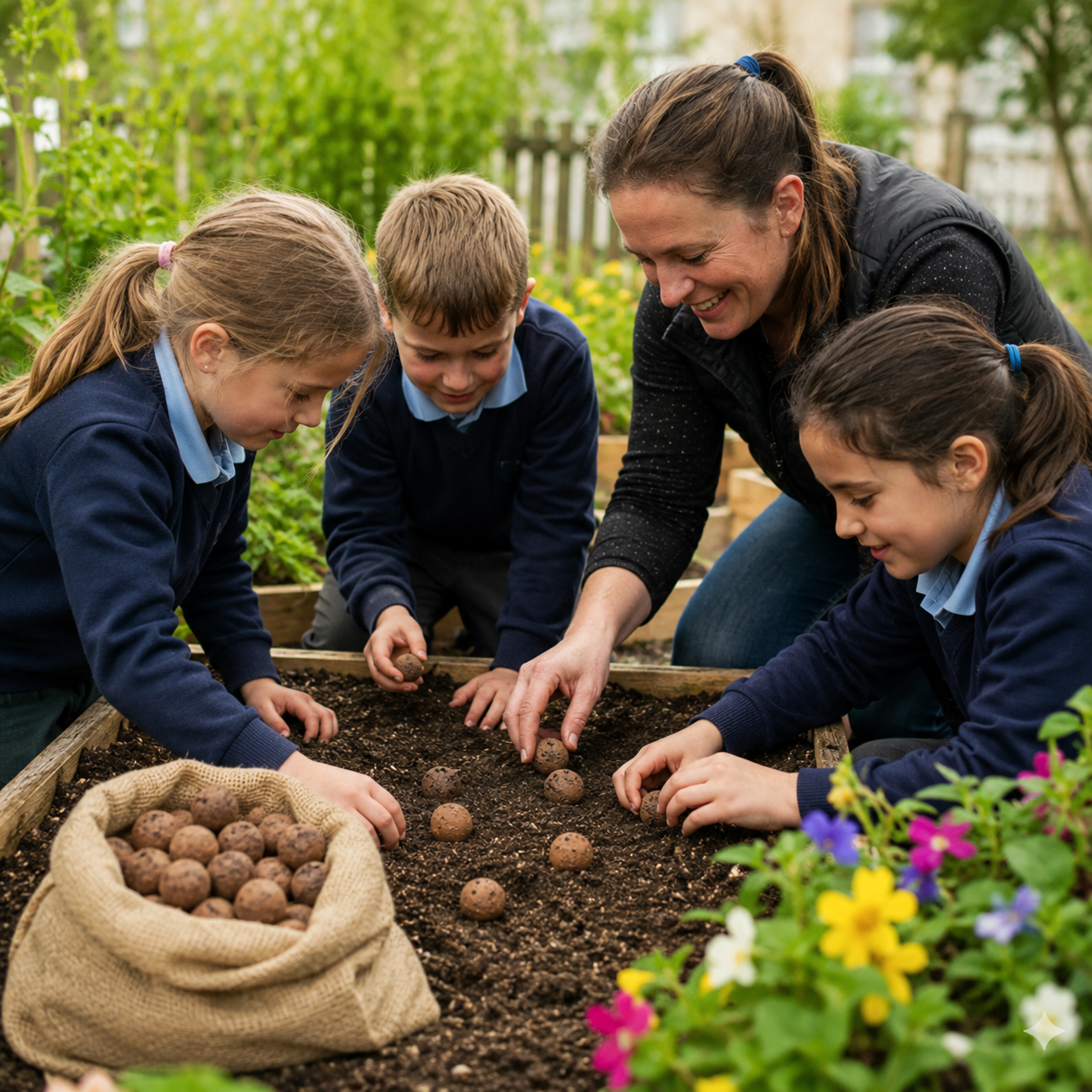
Before planting
Choose a permitted location away from food-preparation and play surfaces. Explain that the seed bombs are for placing on prepared soil and are not toys, sweets or craft materials.
During the activity
Keep an adult present, especially with younger children. Avoid touching eyes or mouths, cover cuts, and use gloves where a school or organisation’s risk assessment requires them.
After planting
Collect unused material, tidy the activity area and wash hands thoroughly. Store remaining seed bombs in their original packaging and out of reach of young children and animals.
Use language children can remember
A short rule works well: “We look, learn and plant—but we only eat plants given to us as food by an adult.” This keeps the message positive without inviting children to test unknown plants for themselves. Schools, clubs and event organisers should also follow their own safeguarding, allergy and activity-risk procedures.
Skin contact, plant material and pollen
People respond differently to plants and pollen. A few practical steps can make gardening more comfortable.
Hands and skin
Some plants can irritate skin or trigger an individual sensitivity. Wear gardening gloves when weeding, pruning or handling cut vegetation, keep skin covered where appropriate and wash exposed skin after the task.
Eyes and face
Avoid rubbing your eyes while gardening. Wash your hands first, and take care when cutting dry stems or moving loose plant material. Follow medical advice if irritation is persistent or concerning.
Pollen and hay fever
Wildflowers produce pollen and no outdoor flower mixture should be described as pollen-free. The NHS advises hay-fever sufferers to monitor symptoms and reduce pollen exposure when counts are high.
Planning for hay fever
Hay fever is an allergic reaction to pollen. Symptoms can include sneezing, coughing, a blocked or runny nose and itchy or watery eyes. Pollen exposure varies with plant type, season, location and weather, so one garden cannot be guaranteed to suit every person with an allergy.
The NHS suggests practical measures such as showering and changing clothes after being outdoors, keeping windows and doors closed as much as possible when pollen counts are high, and speaking to a pharmacist about suitable treatments. The Met Office publishes a regional UK pollen forecast.
Are wildflowers poisonous to pets?
Plant safety varies by species and by animal. A plant tolerated by one type of animal may not be appropriate for another, so a general wildflower mixture should not be treated as pet food, forage or a guarantee of pet-safe planting.
If a dog, cat or other animal regularly chews plants, review the current mixture with your vet before sowing it in an accessible area. Keep unopened and unused seed bombs out of reach, and remove cut or uprooted plant material rather than leaving it where animals may investigate it.
If you believe an animal has eaten a potentially harmful plant, contact a veterinary professional promptly. The RHS advises taking a sample or clear information about the plant with you.
Use current NHS or veterinary advice
This page provides general garden-safety information, not a diagnosis. If you think a person or animal has swallowed or had a concerning reaction to plant material, act on current professional guidance rather than waiting for symptoms or relying on online plant identification alone.
For a child or adult
The NHS says to call 999 or go to A&E if you think someone may have swallowed, touched or breathed in something harmful, or if they have collapsed, stopped breathing, have severe breathing difficulty or a seizure. Call NHS 111 if you are unsure whether the substance is harmful.
While seeking help
Do not try to make the person sick and do not give them food or drink. Keep the product packaging and, if safe to do so, a sample or clear photograph of the plant for the healthcare professional. For an animal, contact a vet promptly and provide the same information.
Read the current NHS poisoning guidance | National Poisons Information Service public guidance
What this guidance means for Seed Bomb Shop products
Clear product use is more helpful than broad claims that every flower is either “safe” or “dangerous”.
For horticulture
Our seed bombs are supplied for sowing wildflowers in suitable pots, beds and prepared outdoor planting areas.
Seeds, soil and clay
The current UK specification combines selected native British wildflower seeds with UK soil and clay.
Not for consumption
The products and resulting ornamental plants are not supplied as food, medicine, pet food or livestock forage.
Check before use
Review current product information, the planting site and the needs of children, pets or allergy sufferers before sowing.
Wildflower and seed bomb safety questions
Are wildflowers poisonous to touch?
Can children use wildflower seed bombs?
Are Seed Bomb Shop wildflower seed bombs edible?
Are wildflowers poisonous to dogs and cats?
Can wildflowers affect hay fever?
Why might other plants appear in the same area?
Trusted UK guidance used for this article
This page was reviewed against current public guidance on 7 September 2026.