An evidence-led wildflower guide
History of Seed Bombs: From Seed Pellets to Modern Gardening
The history of seed bombs carries us through ancient farming stories, Japanese natural farming and the creative energy of 1970s community gardeners. Writers have linked seed-protection methods across the centuries, while the clearest modern chapters connect clay seed pellets with Masanobu Fukuoka and the seed “green-aids” of New York’s Green Guerillas.

An ancient idea, a modern movement
A story carried through farming and creativity
Across cultures and centuries, writers have linked seed-coating and seed-ball methods with the practical idea of protecting seeds before sowing. The journey brings together early agricultural traditions, natural farming and imaginative community planting.
Stories from earlier times
Some accounts connect seed balls with ancient attempts to protect and distribute seeds for food crops and new plant growth, creating an intriguing opening chapter in their story.
Natural farming in Japan
In twentieth-century Japan, Masanobu Fukuoka placed clay seed pellets within a thoughtful natural-farming approach that later reached readers around the world.
Creative urban planting
In early-1970s New York, Liz Christy and the Green Guerillas turned seed-filled “green-aids” into a memorable symbol of community gardening and urban creativity.
Explore the illustrated journey
The history of seed bombs at a glance
Travel from stories of early seed protection to Japanese natural farming, creative urban planting and the seed bombs used today.
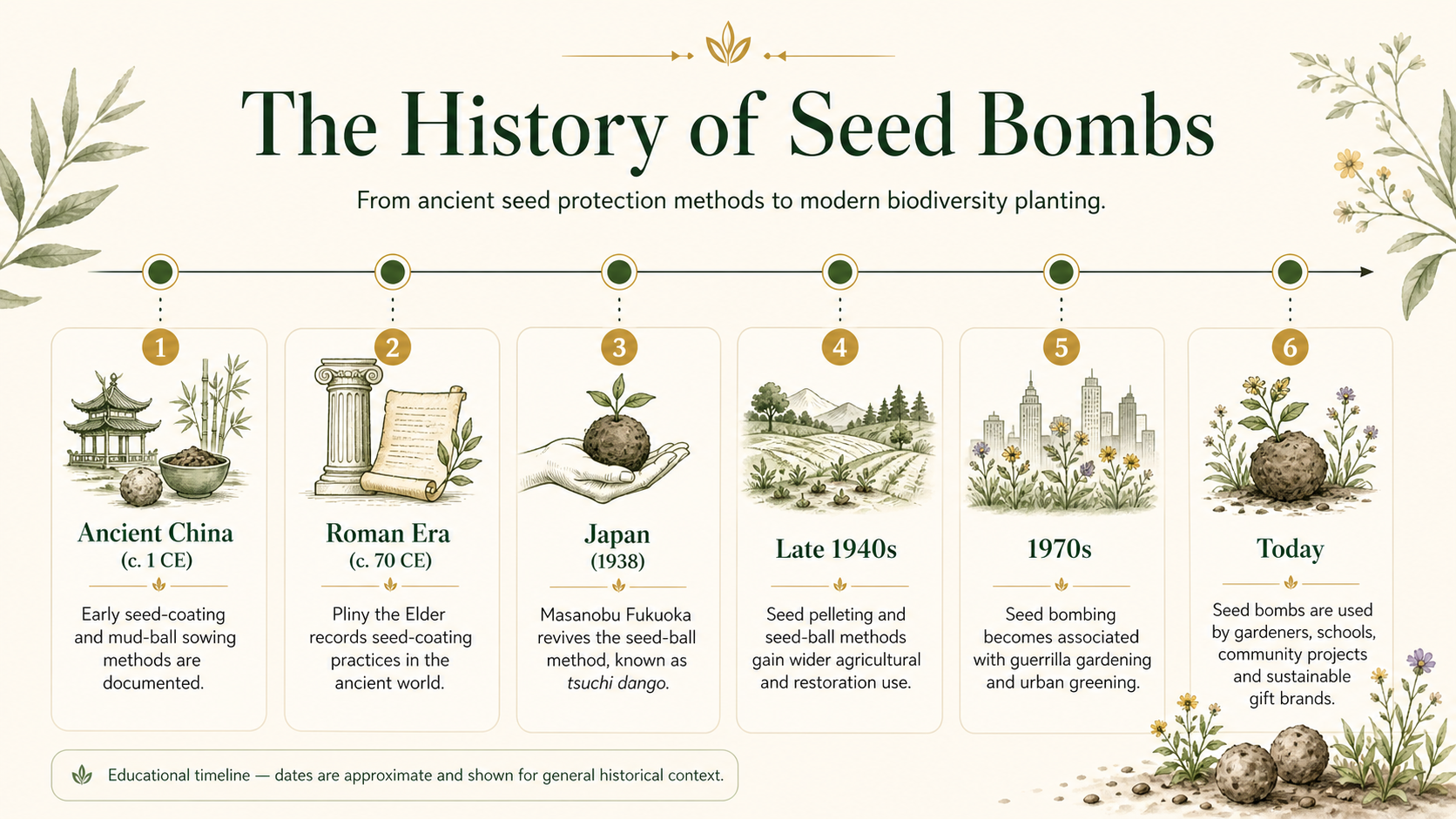
An illustrated journey through stories and milestones commonly associated with seed bombs. Dates are approximate and provide general historical context. On mobile, enlarge the image and swipe across it to read every chapter.
×A concise timeline
History of seed bombs in four memorable chapters
The modern story connects agricultural seed pellets, natural-farming ideas, community gardening and today’s small-scale wildflower products.
Natural farming begins
Fukuoka’s farm records state that he returned home in 1937 and began developing his natural-farming approach.
Urban “green-aids”
Green Guerillas used seed-filled projectiles and direct gardening to draw attention to neglected New York spaces.
A wider readership
The English edition of Fukuoka’s The One-Straw Revolution helped introduce his natural-farming philosophy internationally.
A practical format
Seed balls and seed bombs now appear in gardens, education, community projects and carefully planned promotional gifts.
A major twentieth-century influence
Masanobu Fukuoka and clay seed pellets
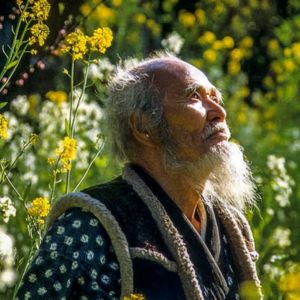
Masanobu Fukuoka (1913–2008) was a Japanese farmer and author whose ideas became influential in natural-farming circles. His farm describes seed pellets made by mixing seeds into clay, drying them and distributing them over the ground. The pellets formed one practical part of his much wider farming philosophy.
Fukuoka described his approach as farming by subtraction: carefully observing natural processes while questioning which interventions were genuinely necessary. The Ramon Magsaysay Award Foundation recognised his natural-farming work with its 1988 Public Service award.
- He began natural farming in Japan in the 1930s.
- Clay pellets helped contain and distribute mixed seeds.
- His books brought the philosophy to a wider international audience.
- His agricultural context was broader than today’s garden seed bombs.
Watch the story
A short video introduction to seed bomb history
This visual overview explores ancient seed-protection stories and the continuing appeal of seed-based planting. It adds another imaginative perspective to the historical journey.
Video: “Restoring Local Biodiversity with Ancient Seed Secrets”, published on YouTube by AI Business Marketing Solutions. The video explores the wider story, while the dated modern milestones on this page are supported by the linked historical and institutional sources.
The language changed
From seed balls and pellets to “seed bombs”
The terms overlap and each carries its own chapter of the story. Recognising their different settings makes the modern journey easier to understand.
Seed pellets
This term is closely associated with Fukuoka’s agricultural work: seeds held within a dried clay mixture and distributed across land.
Seed “green-aids”
Green Guerillas’ own history records seed-filled projectiles thrown over fences in early-1970s New York as part of a wider community-gardening movement.
Modern seed bombs
Today the name often describes compact seed-and-growing-medium products designed for deliberate placement in gardens, pots and managed projects.
What the history means today
Use wildflower seed bombs responsibly in the UK
This colourful history continues through thoughtful planting today. Modern seed bombs work best as a considered gardening format, placed on suitable ground where planting is permitted.
Ask permission
Use your own garden, a container or a managed site where the landowner or responsible organisation has approved planting.
Choose the mix
Check the species, location and intended result, then select a wildflower mix suited to the conditions and purpose of the planting site.
Prepare the ground
Good soil contact and reduced competition give seeds a more realistic opportunity to germinate and establish.
Provide aftercare
Monitor moisture and emerging seedlings. Results vary with species, soil, weather, timing and continuing care.
History questions
History of seed bombs: frequently asked questions
Who invented seed bombs?
The story has several influential chapters. Seed-protection ideas are associated with early agricultural traditions; Masanobu Fukuoka became a major twentieth-century advocate of clay seed pellets; and Liz Christy and the Green Guerillas helped shape the modern urban seed-bomb story in 1970s New York.
Are seed bombs an ancient invention?
Seed bombs are often linked with ancient seed-protection and sowing traditions. The exact journey from those earlier methods to today’s format is best understood as a fascinating historical connection, followed by clearer modern milestones involving Fukuoka and the Green Guerillas.
Did Masanobu Fukuoka invent the modern seed bomb?
Fukuoka’s farm credits him with creating its seed pellets, and his writing helped spread natural-farming ideas internationally. He is therefore one of the most important modern figures in the story, alongside earlier seed-protection traditions and the later urban gardening movement.
What did the Green Guerillas contribute?
The Green Guerillas formed in New York in the early 1970s. Their own history records “seed green-aids” being thrown over fences into vacant lots, alongside hands-on work to create and support community gardens.
Are seed balls and seed bombs exactly the same?
The terms are often used interchangeably, but formats and purposes vary. Agricultural seed pellets, activist-era seed projectiles and today’s garden products may use different ingredients, seeds and planting methods.
Can I throw seed bombs onto any unused land?
Choose your own garden, a container or an authorised managed space. An area that looks unused may still have an owner or a particular ecological purpose, so permission and a suitable seed mix should guide every planting decision.
Where can I learn how seed bombs grow?
Read our evidence-led guide to how seed bombs work, followed by the practical planting guide.
Continue the story responsibly
Ready to plant wildflower seed bombs?
Explore UK wildflower seed bomb products or follow the planting guide before choosing and preparing your site.
Questions? Email enquiry@seedbombshop.co.uk or call 01536 614062.
Discover more about seed bombs in the UK by exploring our website today.