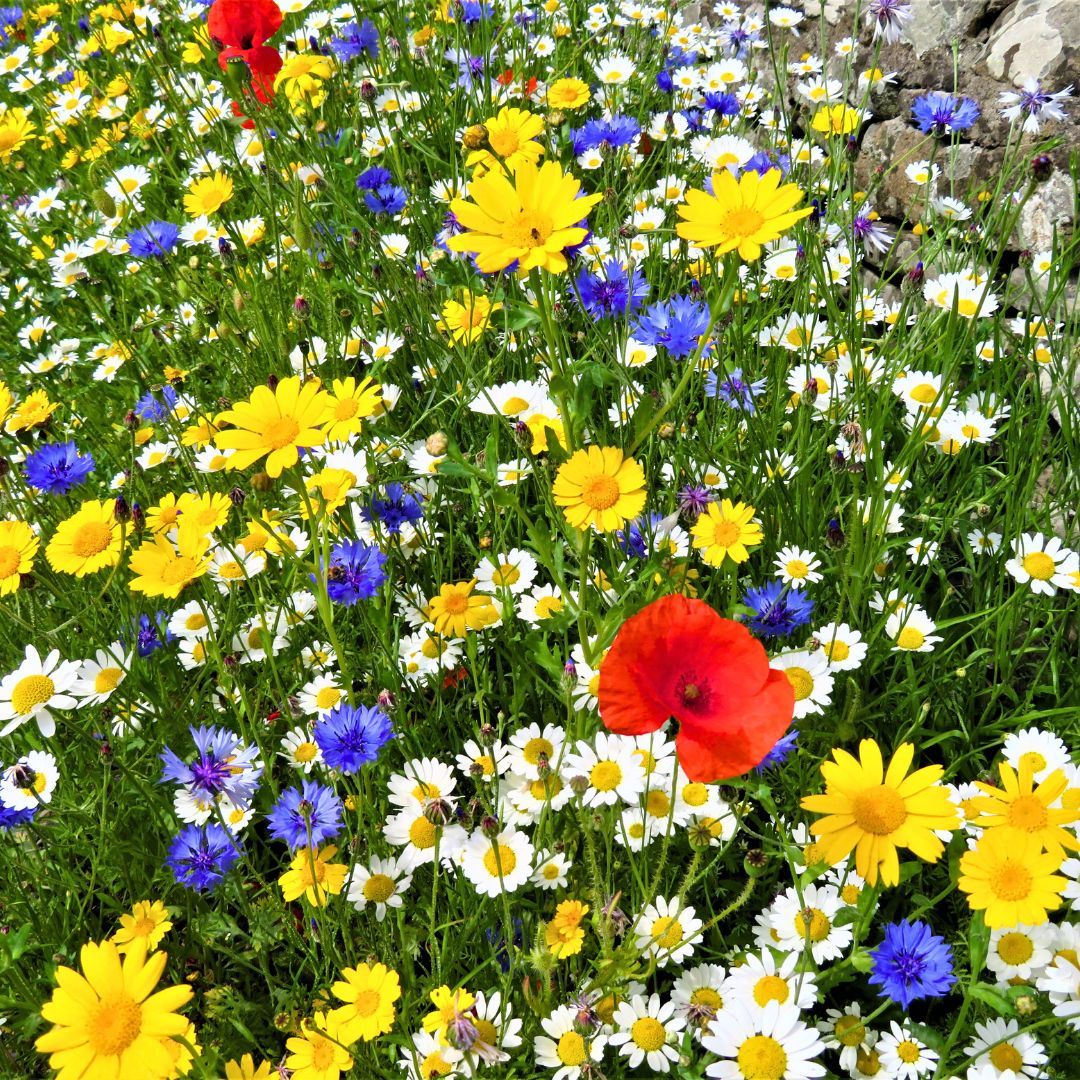
This guide to growing wildflowers will answer your questions and help you transform your outdoor space into a blooming Paradise haven.

Wildflowers are the perfect way to add vibrant, natural beauty if you're dreaming of a garden or outdoor space buzzing with bees and fluttering with butterflies. But when is the best time to sow wildflower seeds in the UK, and how can you use wildflower seed bombs to make it easy and fun? This guide will answer your questions and help you transform your outdoor space into a wildlife haven.
Why Wildflowers?
Wildflowers are more than just pretty faces; they’re the backbone of many ecosystems. They support pollinators like bees, butterflies, and other insects, which are essential for biodiversity. Plus, wildflowers are hardy, low-maintenance, and can grow in places where traditional garden plants struggle. Whether you have a large garden, a balcony with pots, or even a neglected patch of land, wildflowers can thrive and bring it to life.
What Are Wildflower Seed Bombs?
Wildflower seed bombs are a mix of wildflower seeds, compost, and clay. Shaped into small balls, they’re easy to handle and perfect for scattering over soil. This method is not only simple but also fun—a great activity for kids and adults alike. Seed bombs are especially useful for hard-to-reach areas or places where you can’t easily dig and sow seeds.
When to Sow Wildflower Seeds in the UK
The timing for sowing wildflower seeds is crucial to ensure they germinate and grow successfully. The best times are:
Spring (March to May)
Spring sowing works well because the soil is warming up, and there’s often plenty of rainfall. Seeds sown in spring will germinate quickly and grow into blooming plants by summer.Autumn (September to November)
Autumn is actually the most natural time to sow wildflower seeds in the UK. In the wild, plants drop their seeds in late summer and early autumn, leaving them to overwinter in the soil. Sowing in autumn mimics this natural cycle, giving the seeds time to settle and establish roots before sprouting in spring.
Both timings are great, but autumn sowing often yields stronger plants because the seeds have more time to develop and adapt.
How to Use Wildflower Seed Bombs
Using wildflower seed bombs is as easy as 1-2-3. Here’s how:
Choose the Right Spot
Wildflowers prefer sunny, open areas with well-draining soil. Avoid shaded or waterlogged spots, as these can hinder germination and growth.Prepare the Ground
While seed bombs don’t require meticulous preparation, clearing the area of weeds and grass will give your wildflowers the best chance to thrive. Loosen the top layer of soil with a rake for better contact.Scatter and Wait
Simply toss the seed bombs onto the prepared area. The clay in the bombs protects the seeds from birds and pests while they settle into the soil. Rain will help break them down, and nature will take care of the rest. If the weather is dry, water the area gently but thoroughly.
Check out our easy to follow 5 step Guide on
how and when to sow wildflower seed bombs Click Here
Tips for Success
Patience Is Key
Wildflowers are not instant-gratification plants. They take time to establish, and some may not bloom until the following year. Trust the process and enjoy watching your wildflower meadow evolve.Keep It Weed-Free
In the early stages, weeds can compete with your wildflowers for nutrients. Regularly check the area and remove any unwanted plants.Mix It Up
Wildflower mixes often include a variety of species, from annuals like cornflowers to perennials like ox-eye daisies. This ensures a long-lasting display of flowers throughout the growing season.
Why Autumn Sowing Stands Out
If you’re still wondering when to sow wildflower seeds, autumn is often the winner. Here’s why:
Cold Stratification: Many wildflower seeds need a period of cold to germinate. Autumn sowing ensures they experience winter temperatures, which breaks their dormancy.
Natural Rainfall: Autumn weather in the UK is typically wetter, reducing the need for manual watering.
Earlier Blooms: Seeds sown in autumn tend to sprout earlier in spring, giving you a head start on the flowering season.
The Environmental Benefits of Wildflowers
Beyond their aesthetic appeal, wildflowers play a vital role in supporting the environment:
Pollinator Support: Bees, butterflies, and other insects rely on wildflowers for nectar and pollen. By planting wildflowers, you’re helping to combat the decline in pollinator populations.
Soil Health: Wildflowers improve soil structure and prevent erosion. Their roots hold the soil together, especially on slopes or bare patches.
Carbon Capture: Like all plants, wildflowers absorb carbon dioxide, helping to reduce greenhouse gases in the atmosphere.
Making Wildflower Sowing a Community Activity
One of the best things about using wildflower seed bombs is how inclusive the activity can be. Organize a local sowing event in your community or school. Not only will you be beautifying shared spaces, but you’ll also be educating others about the importance of wildflowers.
In Summary
Knowing when to sow wildflower seeds in the UK is the first step to creating your own slice of nature. Whether you opt for spring or autumn sowing, using wildflower seed bombs makes the process easy and enjoyable. With a little patience and care, you’ll soon have a stunning display of flowers that support wildlife and bring joy to everyone who sees them.
So, grab your wildflower seed bombs and get scattering! Your future wildflower haven is just a toss away.