Are wildflowers poisonous? UK wildflower safety guide for families
Wildflower Seed bomb

Are Wildflowers Poisonous? A UK Safety Guide for Families

Calm, practical UK garden guidance

Enjoy wildflowers with simple, sensible safety habits

Are wildflowers poisonous? Most can be enjoyed safely in gardens when treated as ornamental plants, but some species can be harmful if eaten and some may irritate skin. Seed Bomb Shop products are made for planting, not for human or animal consumption, so normal garden supervision and hygiene are important.

Quick answer: the Royal Horticultural Society says serious poisoning by plants is very uncommon in the UK and the general risk of severe poisoning, skin reaction or allergy is low. Its core advice is straightforward: do not eat non-food plants, supervise children, use gloves for gardening tasks, wash hands and keep plant material away from pets.

Five everyday rules

A simple routine for wildflower seed bomb safety

These habits make planting easier to manage at home, in schools and during supervised community activities.

Plant, never eat

Wildflower seed bombs and the plants they produce are horticultural products. Do not taste or use them as food, tea, medicine or animal feed.

Guide children

Make planting an adult-led activity. Teach children that only a trusted adult decides which garden plants are safe to touch or eat.

Wash hands

Wash hands after handling seed bombs, soil or garden plants and before eating. Gloves are sensible when clearing or cutting vegetation.

Protect pets

Keep unsown products, uprooted plants and cuttings away from pets and livestock. Do not allow animals to chew or graze the mixture.

Keep information

Retain the original product details and current species list. This information can help a healthcare professional or vet if advice is needed.

Put the risk in context

Are wildflowers poisonous or safe to grow?

“Wildflower” describes many different flowering plants rather than one safety category. Some familiar garden and wild species are harmless when handled normally. Others may cause digestive upset if eaten, and a smaller number can be more harmful. Certain plants may also contain sap, hairs or natural compounds that irritate sensitive skin.

This does not mean a family must avoid wildflowers. The useful approach is to treat them as ornamental plants: enjoy observing and growing them, but do not eat them unless they are a recognised food plant and have been identified by a suitably qualified person.

A planted area may also contain species that were already present in the soil or arrived naturally. Never assume that every seedling or flower in the area came from the seed mixture. Identify unfamiliar plants independently and keep the planting record for reference.

Positive outdoor learning

Wildflower activities with children and schools

Wildflower planting can introduce children to seeds, seasons and garden care while adults set clear, age-appropriate boundaries.
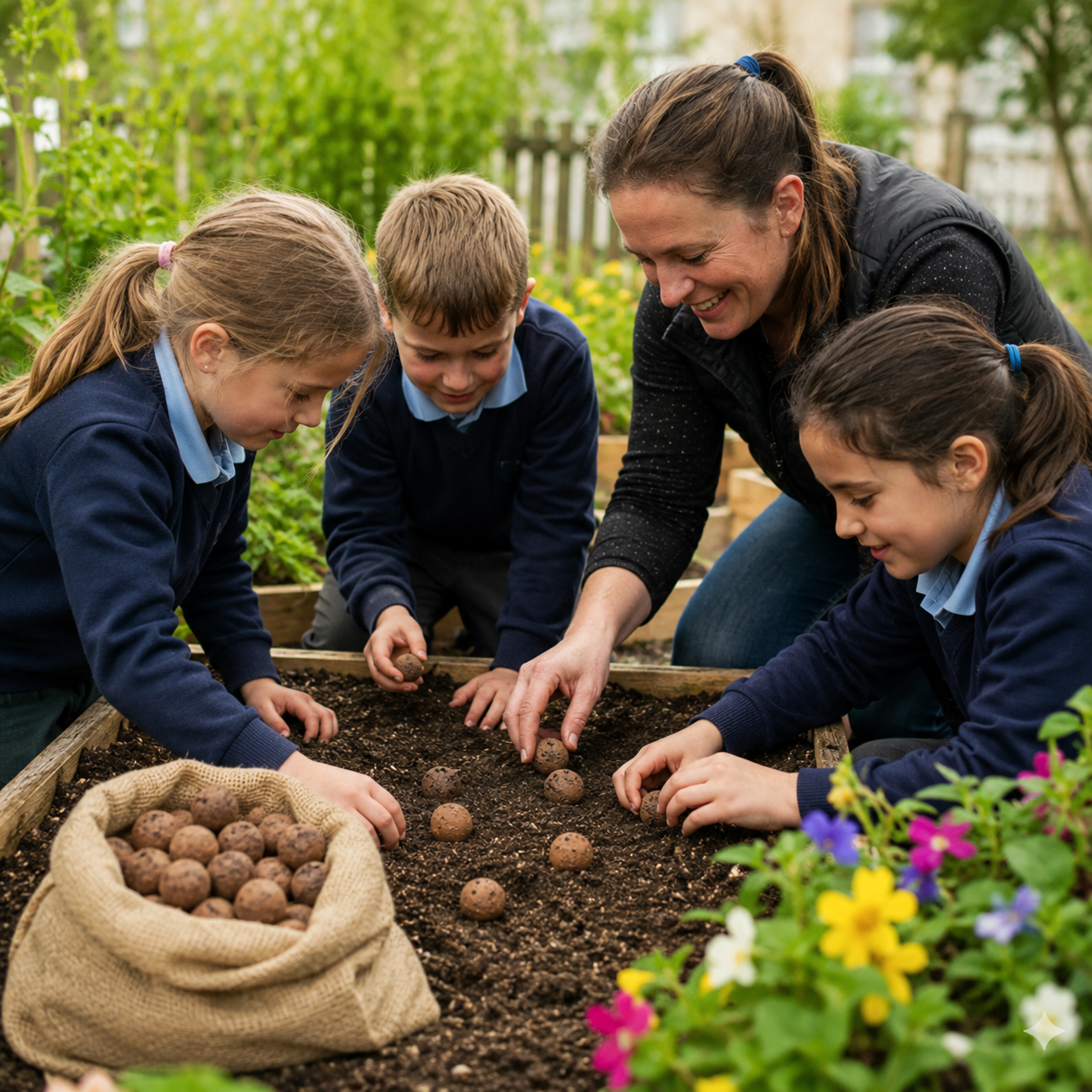
Adult supervising children planting wildflower seed bombs in a UK school garden
Adult-supervised wildflower seed bomb planting. Select the image to open the full 1254 × 1254 version, then pinch to zoom on mobile.

Before planting

Choose a permitted location away from food-preparation and play surfaces. Explain that the seed bombs are for placing on prepared soil and are not toys, sweets or craft materials.

During the activity

Keep an adult present, especially with younger children. Avoid touching eyes or mouths, cover cuts, and use gloves where a school or organisation’s risk assessment requires them.

After planting

Collect unused material, tidy the activity area and wash hands thoroughly. Store remaining seed bombs in their original packaging and out of reach of young children and animals.

Use language children can remember

A short rule works well: “We look, learn and plant—but we only eat plants given to us as food by an adult.” This keeps the message positive without inviting children to test unknown plants for themselves. Schools, clubs and event organisers should also follow their own safeguarding, allergy and activity-risk procedures.

Handling and seasonal comfort

Skin contact, plant material and pollen

People respond differently to plants and pollen. A few practical steps can make gardening more comfortable.

Hands and skin

Some plants can irritate skin or trigger an individual sensitivity. Wear gardening gloves when weeding, pruning or handling cut vegetation, keep skin covered where appropriate and wash exposed skin after the task.

Eyes and face

Avoid rubbing your eyes while gardening. Wash your hands first, and take care when cutting dry stems or moving loose plant material. Follow medical advice if irritation is persistent or concerning.

Pollen and hay fever

Wildflowers produce pollen and no outdoor flower mixture should be described as pollen-free. The NHS advises hay-fever sufferers to monitor symptoms and reduce pollen exposure when counts are high.

Planning for hay fever

Hay fever is an allergic reaction to pollen. Symptoms can include sneezing, coughing, a blocked or runny nose and itchy or watery eyes. Pollen exposure varies with plant type, season, location and weather, so one garden cannot be guaranteed to suit every person with an allergy.

The NHS suggests practical measures such as showering and changing clothes after being outdoors, keeping windows and doors closed as much as possible when pollen counts are high, and speaking to a pharmacist about suitable treatments. The Met Office publishes a regional UK pollen forecast.

Pets and grazing animals

Are wildflowers poisonous to pets?

Plant safety varies by species and by animal. A plant tolerated by one type of animal may not be appropriate for another, so a general wildflower mixture should not be treated as pet food, forage or a guarantee of pet-safe planting.

If a dog, cat or other animal regularly chews plants, review the current mixture with your vet before sowing it in an accessible area. Keep unopened and unused seed bombs out of reach, and remove cut or uprooted plant material rather than leaving it where animals may investigate it.

If you believe an animal has eaten a potentially harmful plant, contact a veterinary professional promptly. The RHS advises taking a sample or clear information about the plant with you.

If something may have been swallowed

Use current NHS or veterinary advice

This page provides general garden-safety information, not a diagnosis. If you think a person or animal has swallowed or had a concerning reaction to plant material, act on current professional guidance rather than waiting for symptoms or relying on online plant identification alone.

For a child or adult

The NHS says to call 999 or go to A&E if you think someone may have swallowed, touched or breathed in something harmful, or if they have collapsed, stopped breathing, have severe breathing difficulty or a seizure. Call NHS 111 if you are unsure whether the substance is harmful.

While seeking help

Do not try to make the person sick and do not give them food or drink. Keep the product packaging and, if safe to do so, a sample or clear photograph of the plant for the healthcare professional. For an animal, contact a vet promptly and provide the same information.

Read the current NHS poisoning guidance  |  National Poisons Information Service public guidance

Product-specific clarity

What this guidance means for Seed Bomb Shop products

Clear product use is more helpful than broad claims that every flower is either “safe” or “dangerous”.

Purpose

For horticulture

Our seed bombs are supplied for sowing wildflowers in suitable pots, beds and prepared outdoor planting areas.

Composition

Seeds, soil and clay

The current UK specification combines selected native British wildflower seeds with UK soil and clay.

Boundary

Not for consumption

The products and resulting ornamental plants are not supplied as food, medicine, pet food or livestock forage.

Good practice

Check before use

Review current product information, the planting site and the needs of children, pets or allergy sufferers before sowing.

Frequently asked questions

Wildflower and seed bomb safety questions

Are wildflowers poisonous to touch?
Most wildflowers can be observed and handled normally, but some plants may irritate skin or cause an allergic response in susceptible people. The RHS recommends gloves when pruning or weeding, keeping skin covered and washing hands after gardening.
Can children use wildflower seed bombs?
Children can take part in an adult-led planting activity when the product is used as directed. Keep seed bombs away from mouths and eyes, supervise young children, collect unused material and wash hands afterwards. Organisations should follow their own safeguarding and risk-assessment requirements.
Are Seed Bomb Shop wildflower seed bombs edible?
No. They are horticultural planting products made with seed, UK soil and clay. They are not supplied for human or animal consumption and should not be used as food, tea, medicine, pet food or livestock feed.
Are wildflowers poisonous to dogs and cats?
Plant effects differ between animal species, so the answer depends on the flower and the animal. Do not allow pets to eat a general wildflower mixture. If your pet chews plants, ask your vet to review the current species list before you sow it in an accessible area.
Can wildflowers affect hay fever?
Yes. Wildflowers produce pollen, and individual sensitivities vary. Check the Met Office pollen forecast and follow current NHS hay-fever guidance. No outdoor flower mixture should be presented as pollen-free or guaranteed suitable for every allergy sufferer.
Why might other plants appear in the same area?
Soil can already contain dormant seed, and seed can also arrive from neighbouring plants, wind, birds or other natural movement. Identify unfamiliar growth separately rather than assuming every plant came from the seed bomb mixture.
Continue with practical guidance

Plan a well-informed wildflower project

Review the current mixture before planting, choose an appropriate permitted site and follow the Seed Bomb Shop growing guide for preparation and aftercare.

Questions about the product specification? Email enquiry@seedbombshop.co.uk or call 01536 614062. For suspected poisoning or an allergic reaction, contact the appropriate healthcare or veterinary service rather than using this sales contact.

Read More
Communities in Towns and Villages across the UK planting wildflower seed bombs for Pollinators
Wildflower Seed bomb

Pollinator Seed Bomb Projects for UK Towns and Villages

UK community planting guide

Pollinator Seed Bomb Projects for UK Towns and Villages

Pollinator seed bombs can help town councils, parish councils and community groups turn a carefully approved wildflower planting idea into a visible local project. This guide covers planning, permission, site preparation, community participation and ongoing care.

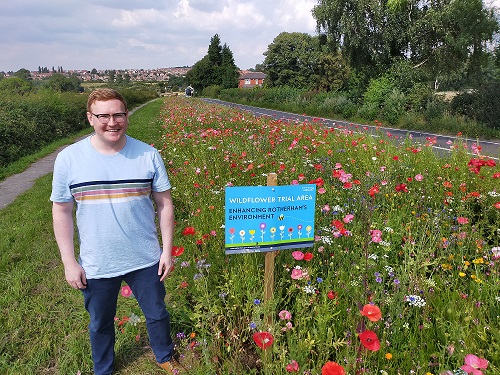
Wildflower area beside a UK roadway showing the type of location considered for pollinator seed bombs
Tap or click the photograph to open the full-size image.
Obtain landowner permission Assess the proposed site Prepare and care for the soil Record what establishes

Can pollinator seed bombs be used in community projects?

Yes. Pollinator seed bombs can provide a simple planting format for an approved, clearly defined area such as a community garden, planter, school growing space or suitable managed verge. Successful establishment still depends on site conditions, appropriate seed selection, soil preparation, weather, watering and follow-up management.

A positive project begins with realistic objectives. Rather than promising an instant biodiversity result, the group can focus on creating a flower-rich space, involving residents and learning from what successfully establishes at the chosen location.

Local opportunities

Where pollinator seed bombs can fit in a community project

The appropriate setting will depend on ownership, existing land use, soil conditions and the maintenance plan. Start with one manageable location and involve the people responsible for the land from the beginning.

01

Town and parish council land

Carefully selected planters, community gardens or agreed open spaces can provide a visible starting point when the council and grounds team approve the location and management plan.

02

Village community spaces

Village halls, shared gardens and other locally managed spaces can support a small planting activity where ownership, access and maintenance responsibilities are clear.

03

Schools and youth groups

An approved growing area can connect planting with observation, seasonal learning and simple records of the flowers and visiting insects seen by participants.

04

Community gardens

Established community gardens may offer defined plots, volunteers and an existing care routine. The planting should complement the garden’s current plan and neighbouring plants.

05

Planters and containers

Containers can provide a controlled option where the project team can prepare the growing medium, manage watering and monitor the planting without altering a larger area.

06

Suitable managed verges

Verge planting requires direct agreement with the relevant landowner or authority and coordination with mowing, visibility, access, utilities and road-safety requirements.

From idea to planting

Plan a community project with pollinator seed bombs in six practical steps

A small, properly managed pilot can help a group understand the location, maintenance requirements and community response before considering a wider project.

1

Define the purpose

Decide whether the project is intended for community participation, education, a flower-rich display or a combination of clearly stated aims.

2

Confirm ownership

Identify the landowner and obtain permission before planting. Public land should never be treated as an unapproved planting area.

3

Assess the location

Review sunlight, soil, drainage, existing vegetation, public access and how the space is currently maintained.

4

Choose an appropriate mix

Check that the proposed seed mix is appropriate for the intended location and project. Seek specialist ecological advice for sensitive or protected sites.

5

Prepare and plant

Reduce competing growth and expose suitable soil where appropriate. Follow the product’s planting, spacing, watering and seasonal instructions.

6

Care and record

Assign responsibility for watering and maintenance, then record what germinates, flowers and visits the planting over time.

Documented community activity

Examples of UK pollinator projects

These council-published examples show different ways local authorities, residents and community organisations have approached flower-rich planting and pollinator engagement. They also illustrate the planning context in which pollinator seed bombs may be considered.

Saltford Wildflower Project

Saltford Parish Council launched a village wildflower initiative in 2021. Residents proposing planting on council-owned land were required to obtain agreement from the relevant parks team, helping coordinate planting with land management and mowing.

Read the council project record

Torbay Pollinator Patches

Torbay Council reported a community pollinator-patch scheme using flowerbeds, planters, pots and plots. The project included seed, establishment guidance, care information and links to community activities.

Read the Torbay Council report

North Herts Bee Corridor

In April 2026, North Herts Council reported a Baldock community event connected to its district-wide Bee Corridor project. Residents, schools, businesses and community groups participated in activities that included seed-bomb planting.

Read the North Herts report

Record the progress of projects using pollinator seed bombs

When pollinator seed bombs form part of the activity, simple and consistent records can show what was planted, what care was provided and what was observed—without overstating the outcome.

Photograph the starting point

Record the approved area before preparation, during planting and at regular intervals afterwards.

Keep a planting record

Note the date, location, approximate area, preparation method and seed product used.

Record care provided

Maintain a simple log of watering, maintenance and any changes made during the growing period.

Share honest observations

Report what established and what visitors observed rather than presenting assumptions as measured ecological results.

Community participation

Help people understand a project using pollinator seed bombs

Clear communication helps residents understand why the location was selected, what has been planted and who is responsible for looking after the area.

  • Publish a simple project outline: explain the location, permission, planting date and intended purpose.
  • Invite suitable local participation: involve schools, residents, gardening groups and businesses where their contribution is relevant and safely managed.
  • Provide clear planting guidance: explain that establishment depends on preparation, conditions, watering and care.
  • Coordinate with grounds teams: make sure mowing and maintenance schedules reflect the approved planting plan.
  • Share progress responsibly: use photographs and recorded observations instead of making unsupported biodiversity or environmental-impact claims.
Project questions

Pollinator seed bombs: frequently asked questions

Can seed bombs be scattered on public land?

Not without permission. Confirm ownership and obtain agreement from the relevant council, landowner or managing organisation before planting. The proposed location may also be affected by mowing, access, safety, utilities or existing habitat management.

Are pollinator seed bombs guaranteed to flower?

No seed product can guarantee germination or flowering. Results depend on factors including preparation, soil, light, moisture, weather, competition from existing plants and ongoing care.

How many seed bombs will a community project need?

The quantity depends on the approved planting area, the selected product and its stated coverage or spacing instructions. Measure the proposed area and confirm the required quantity before ordering.

Can seed bombs be used on roadside verges?

Only where the responsible authority has approved the project. Verge projects require careful consideration of road safety, visibility, access, underground services, existing vegetation and maintenance schedules.

Will one project increase local biodiversity?

A well-planned flower-rich planting may contribute food resources for visiting insects when appropriate plants establish. However, wider biodiversity outcomes depend on habitat quality, connectivity, management and evidence collected over time.

Should we begin with a small pilot area?

A defined pilot is a sensible way to test the site, preparation method, care requirements and community response before proposing a larger planting programme.

Prepare the project outline

Planning a project with pollinator seed bombs?

Tell us about the approved location, approximate planting area, intended participants and proposed timing. We can then discuss suitable wildflower seed bomb options without assuming site conditions, quantities or establishment results.

Questions? Email enquiry@seedbombshop.co.uk or call 01536 614062.

Read More
Wildflower Seed bomb

Native British Wildflower Seeds: 31 Species for Bees and Pollinators

Seed Bomb Shop UK mix guide

Native British Wildflower Seeds 31 Species for Bees and Pollinators

Native British wildflower seeds form the heart of our 31-species seed bomb mix. Four annuals and 27 perennials are combined with UK soil and clay to create wildflower seed bombs for gardens, pots and suitable planting projects across the UK.

31 native British wildflower species 4 annuals and 27 perennials Made with UK soil and clay Wildflower mix with no grasses

How native British wildflower seeds can help visiting pollinators

Bees and other flower-visiting insects use flowering plants as sources of nectar and pollen. A varied wildflower mix can provide different flower shapes and flowering periods, giving visitors a broader choice than a single-species display when site conditions allow the plants to establish and bloom.

The seed bombs themselves are a planting format; the flowers that may grow from them are the potential food source. Results depend on soil contact, light, moisture, temperature, local conditions and continuing care. Not every species will appear in every location or season.

For evidence-led plant selection, explore the Royal Horticultural Society’s independent Plants for Pollinators guidance .

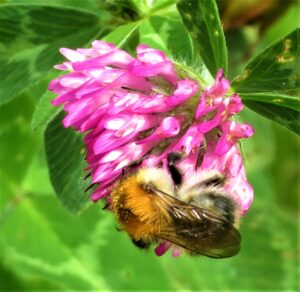
Bee visiting clover beside native British wildflower seeds for pollinator planting
Select the image to open a larger view. Flowers may provide nectar or pollen when they establish and bloom.

Why our native British wildflower seed mix includes annuals and perennials

Four annual wildflowers

Annuals complete their life cycle within one growing season. With suitable sowing conditions, some may flower during their first season and can bring recognisable colour to a new planting area.

Twenty-seven perennial wildflowers

Perennials generally take a longer-term approach. Some may concentrate on root and leaf growth before flowering, then return in later seasons where the site, maintenance and weather remain suitable.

A 31-species mix means the seed recipe contains 31 named species. It does not mean all 31 are guaranteed to germinate or flower together in every garden, pot or planting project.

The complete 31-species native British wildflower seeds list

This is the confirmed Seed Bomb Shop UK wildflower mix. It contains four annual species and 27 perennial species, with no grasses added to the wildflower recipe.

Annual species — 4

  1. Chamomile
  2. Corn Marigold
  3. Cornflower
  4. Poppy

Perennial species — 27

  1. Betony
  2. Birdsfoot Trefoil
  3. Clustered Bellflower
  4. Devil’s-bit Scabious
  5. Field Scabious
  6. Dark Mullein
  7. Greater Knapweed
  8. Kidney Vetch
  9. Lady’s Bedstraw
  10. Lesser Knapweed
  11. Meadow Buttercup
  12. Meadow Cranesbill
  13. Meadow Vetchling
  14. Oxeye Daisy
  15. Plantain
  16. Purple Loosestrife
  17. Ragged Robin
  18. Red Campion
  19. Red Clover
  20. Selfheal
  21. St John’s Wort
  22. Toadflax
  23. Tufted Vetch
  24. Viper’s Bugloss
  25. Wild Carrot
  26. Wild Marjoram
  27. Yarrow

Plan a suitable place for wildflower seed bombs for bees

Wildflower seeds for bees still need a suitable growing place. Choose an area where planting is permitted, where the soil can be prepared and where the developing plants will not be removed as ordinary weeds.

Choose

Select your own garden, pot or an approved project site with appropriate light and access for care.

Prepare

Reduce dense grass and competing growth, then expose some soil so the seed bombs can make direct contact.


Read More
Promoting biodiversity in UK schools through a planned wildflower seed bomb garden project
Wildflower Seed bomb

Promoting Biodiversity in UK Schools: A Practical Guide

A practical school grounds guide

Promoting Biodiversity in UK Schools

Promoting biodiversity in UK schools can begin with one small, approved and carefully prepared wildflower area. A seed bomb project gives pupils a practical way to observe germination, flowering, seasonal change and visiting insects while the school tests what works on its own site.

Start with permission, choose a suitable location and plan who will prepare, monitor and maintain it. Pots, planters, raised beds and small areas of exposed soil can all provide a manageable first step.

Promoting biodiversity in UK schools through a planned wildflower seed bomb garden project
School wildflower project inspiration. Open the image for a full-size view.
Permission firstAgree the site, supervision and maintenance plan with the school.
Start smallTest a planter, raised bed or defined patch before considering more.
Prepare the soilSeeds need contact with exposed soil and less competition from existing plants.
Observe and recordTrack weather, germination, flowers, insects and ongoing care.

Why Choose a School Wildflower Project?

A well-planned project can connect science, outdoor learning and stewardship in one visible space. It does not need to begin as a large meadow. A small pilot is easier to approve, prepare and monitor, and it gives the school evidence to guide future decisions.

Visible outdoor learning

Pupils can follow change over time rather than treating planting as a one-day activity.

Shared responsibility

Classes, eco groups and grounds teams can agree simple roles for observation and care.

A practical pilot

The school can test site choice, preparation and maintenance before expanding the idea.

Keep expectations realistic: wildflower establishment is affected by soil, light, drainage, weather, season, competing vegetation and aftercare. Planting creates an opportunity for learning and habitat improvement, but particular flowers or visitor numbers cannot be guaranteed.

Promoting Biodiversity in UK Schools Starts with a Site Survey

Before ordering or planting, walk the proposed area with the relevant teacher, site manager or grounds team. The aim is to find a permitted location that pupils can access safely and that the school can maintain after the initial activity.

  • Approval: confirm ownership, permission, supervision and safeguarding requirements.
  • Light: note how much sun and shade the area receives during the day.
  • Soil and drainage: check whether the surface is compacted, waterlogged or very dry.
  • Existing plants: identify grass, vigorous weeds and any established habitat that should remain undisturbed.
  • School use: avoid sports areas, access routes and places where planting could create a trip or maintenance issue.
  • Future care: agree how watering, mowing, weeding and holiday cover will be managed.

For wider planning, the Eco-Schools biodiversity topic and the National Education Nature Park grounds guidance provide useful ideas for involving the whole school.

A Five-Step Wildflower Seed Bomb Project for UK Schools

Use this sequence to turn a planting idea into a controlled project with clear responsibilities and useful observations.

Define the purpose

Decide what pupils will explore. This might include germination, plant growth, seasonal change, insect observation or the practical care of a planted area. Match activities to pupil age and school requirements.

Approve and mark the location

Choose private school grounds where planting is permitted, or use pots, planters and raised beds. Mark the boundary so pupils and grounds staff understand what the area is for.

Prepare for seed-to-soil contact

Reduce dense plant competition and create exposed soil according to the product guidance. Simply placing seed bombs on thick grass or vigorous weeds can limit establishment.

Plant and provide aftercare

Follow the instructions supplied with the selected product. Record the planting date and recent weather, then monitor moisture and disturbance. Water only where appropriate and permitted.

Observe, record and review

Photograph the same viewpoint, note changes and review what the school learned. Use those records to decide whether to repeat, adapt or carefully extend the project.

How Wildflower Seed Bombs Fit the Project

Seed bombs combine seed with a protective clay-and-soil carrier, making them easy to handle during a supervised school activity. They still require a suitable, prepared location; they are not a substitute for site assessment or ongoing care.

Seed Bomb Shop UK’s native British wildflower mix contains 31 species: 4 annuals and 27 perennials. This mixture can introduce pupils to different growth habits and flowering times, although not every species will establish at every school site.

Before planting, read the wildflower seed bomb growing guide. Schools considering products can also browse the UK seed bomb shop.

Turn Planting into an Ongoing Learning Activity

Observation is what turns a planting session into a longer school project. Keep the method simple enough to repeat and avoid handling or disturbing plants and insects unnecessarily.

The Eden Project’s wildflowers in schools resources include ideas for growing in school grounds and containers. Teachers can select or adapt activities that suit their pupils, curriculum and site.

Useful things to record

  • Planting date, location and preparation method
  • Rainfall, dry periods and any watering
  • First visible seedlings and later flowers
  • Plant height or simple photographic changes
  • Visiting insects observed without capture
  • Maintenance work and lessons for next time

Aftercare and Realistic Expectations

Check the planted area regularly, particularly during establishment and dry weather. Remove or manage competing vegetation only as agreed with the school’s grounds plan. Make sure routine mowing or other maintenance does not accidentally remove the project area before pupils have finished observing it.

Some seeds may germinate quickly while others may take longer or may not establish. Annual and perennial species behave differently, and the display can change from one season to the next. Weather, soil and care all influence the result, so use the project record to explain variation rather than promising a fixed outcome.

If the pilot is successful for the school, review the evidence with staff and pupils before increasing the area. A measured extension is easier to manage than an unplanned large sowing.

School Wildflower Project Questions

Can schools use wildflower seed bombs in pots and planters?

Yes, where the container, growing medium, drainage and location are suitable. Containers can make a small pilot easier to supervise, but they may need more frequent moisture checks than open ground.

Do seed bombs work when placed on grass?

Dense grass creates strong competition and can prevent good seed-to-soil contact. A prepared area of exposed soil is normally a more controlled choice. Follow the instructions supplied with the product.

When should a UK school sow wildflower seed bombs?

Use the timing given for the selected product and consider local weather and soil conditions. Schools should also plan around holidays so somebody can monitor the area during early establishment.

Will every species flower at every school?

No. Germination and flowering vary with site conditions, preparation, weather, season, competition and aftercare. No particular species mix or flowering result can be guaranteed at every location.

How can we support promoting biodiversity in UK schools safely?

Begin with school approval, a site survey, a small defined area, supervised activities and an agreed maintenance plan. Do not plant on public, protected or privately owned land without permission.

Continue the Wildflower Learning Journey

Plan a manageable first step

Create a School Wildflower Seed Bomb Project

Choose an approved location, prepare it carefully and give pupils a project they can observe over time. Explore the range or contact Seed Bomb Shop UK to discuss your school’s intended area and project aims.

Questions? Email enquiry@seedbombshop.co.uk or call 01536 614062.

Read More
UK Biodiversity and Wildlife Resources: Trusted Links
Wildflower Seed bomb

UK Biodiversity and Wildlife Resources: Trusted Links

Read More