Sustainable Branded Gifts for UK Events & Trade Shows
Wildflower Seed bomb

Sustainable Promotional Products UK

UK business buyer guide

Sustainable Promotional Products UK

Sustainable promotional products UK businesses can use at trade shows, conferences and campaigns should be selected for audience relevance, practical value and supportable product information. This guide explains how to compare branded gift options without relying on vague environmental claims.

Trade shows and conferences Client and staff gifting Campaign mailers Branded event giveaways
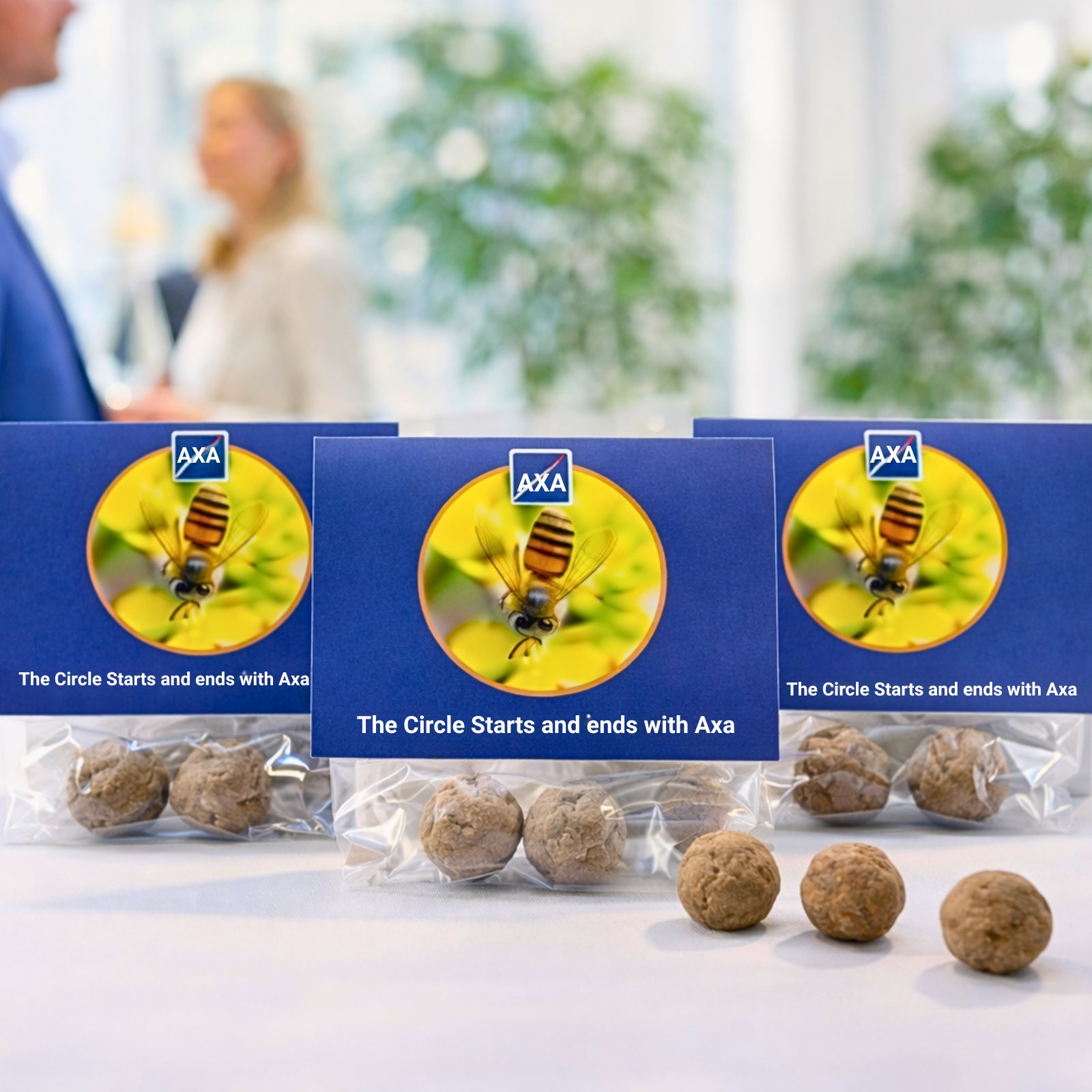
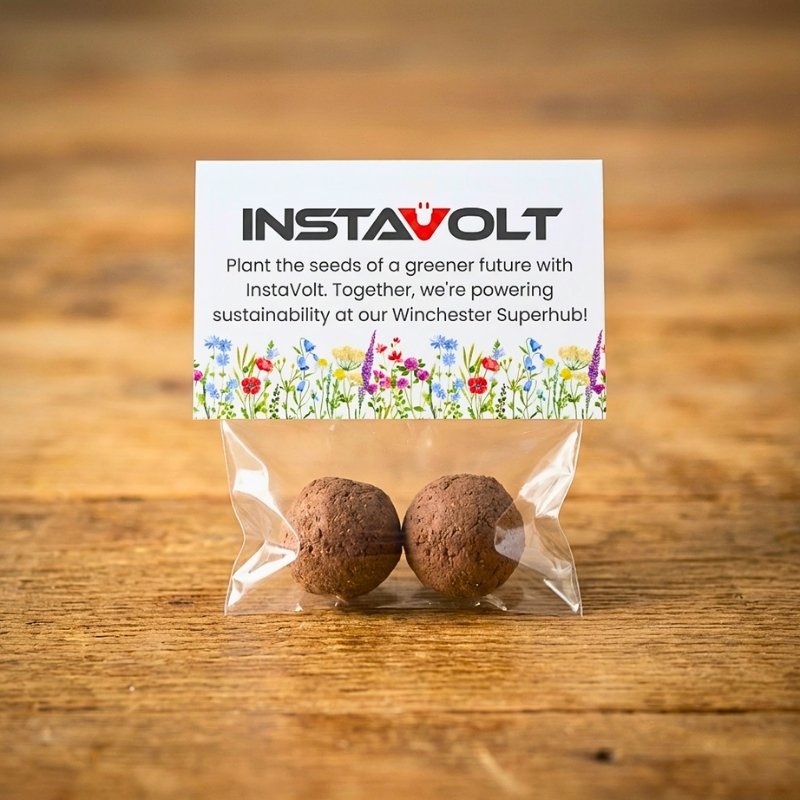
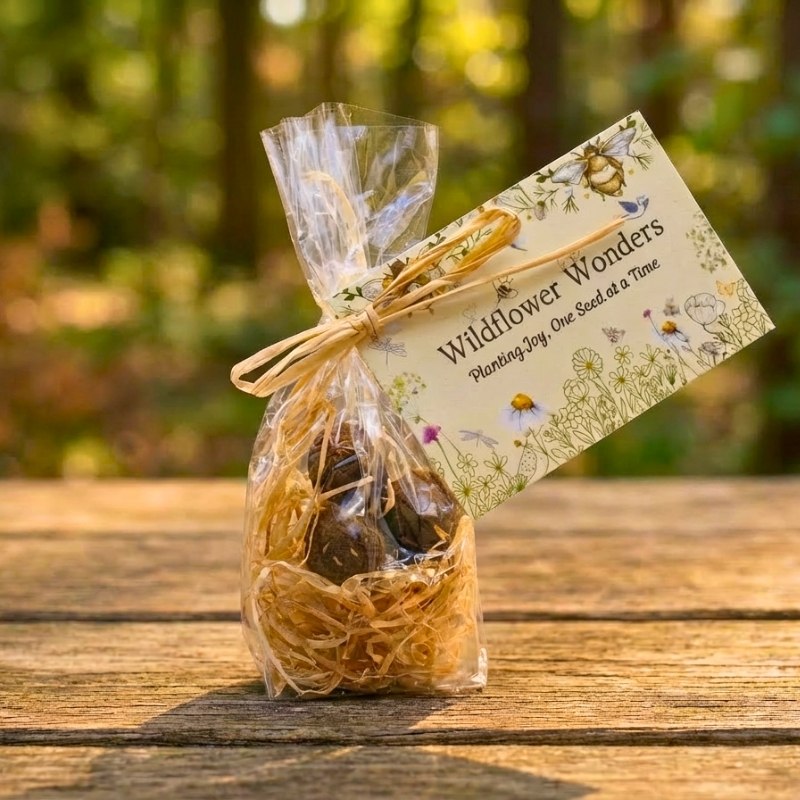
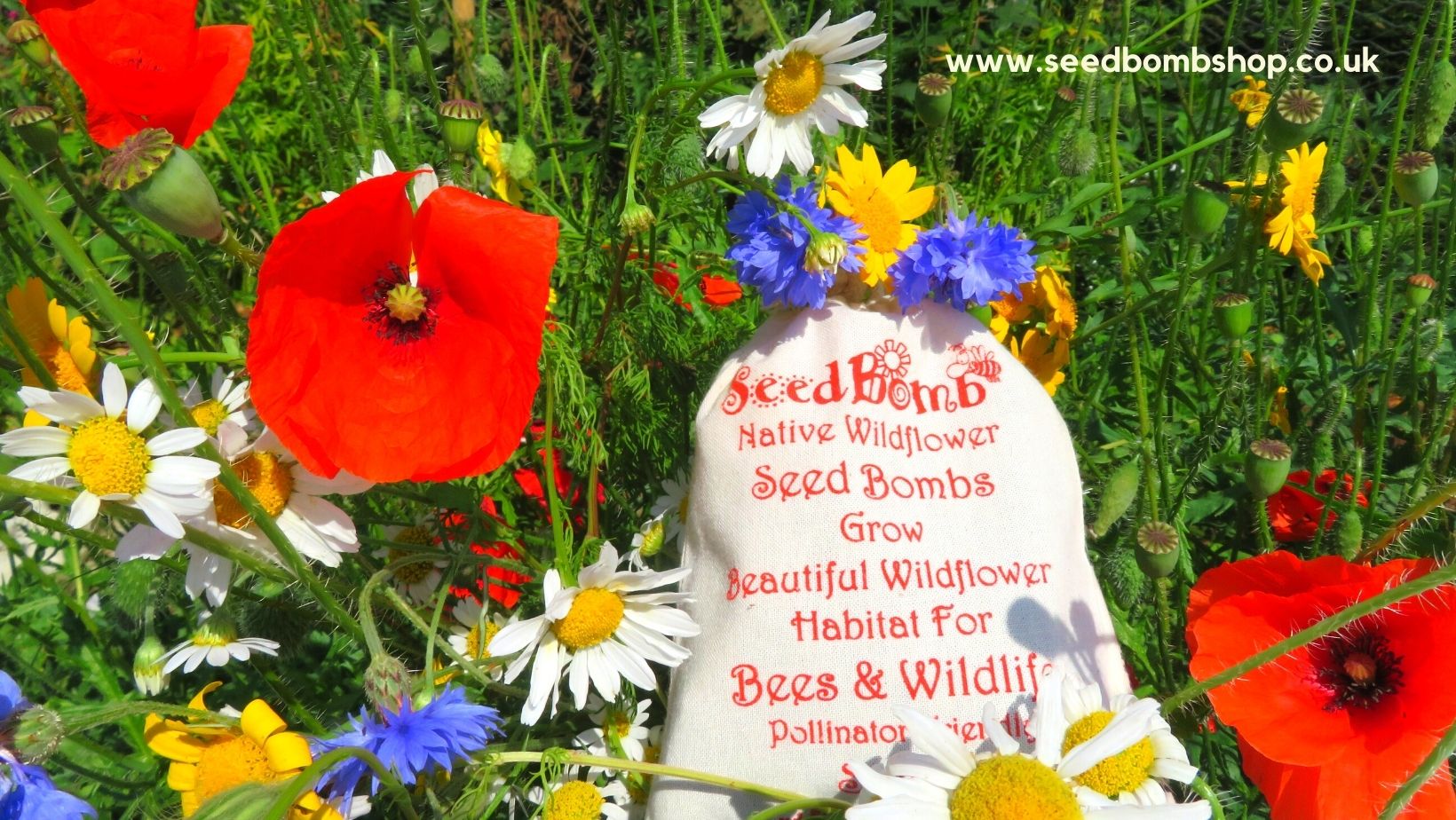
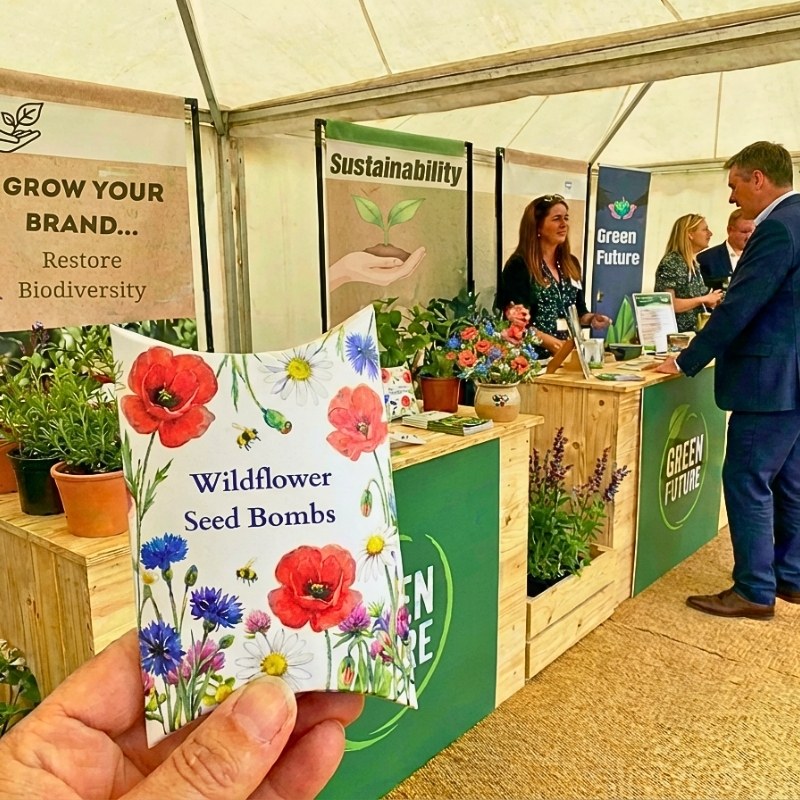
Sustainable Promotional Products UK example showing branded wildflower seed bomb gift sacks for business events

Start with the evidence

Sustainable Promotional Products UK: What Should Buyers Assess?

There is no single label that answers every buying question. A stronger decision considers the product, its packaging, how it will be used and whether the supplier can support the claims being made.

Purpose

Choose an item that fits the audience, setting and campaign objective rather than selecting on novelty alone.

Materials

Ask what the product and packaging are made from, and which material statements can be documented.

Usefulness

Consider what the recipient can realistically do with the item after the event or campaign has finished.

Communication

Make sure the branding and instructions explain the product clearly without overstating its impact.

Delivery

Check quantity, artwork, packing and delivery requirements before approving a format for your campaign.

A product with a next action

Where branded wildflower seed bomb gifts can fit

A seed bomb gift combines a branded message with something the recipient can plant. Clear planting instructions help connect the giveaway to a practical follow-up action.

Events

Trade show giveaways

A compact handout option for exhibition stands, delegate packs and conversations with prospective customers.

Conferences

Delegate gifts

A branded item that can include planting guidance and a message connected to the event or organisation.

Campaigns

Promotional mailers

A format to consider for campaign packs, brand launches and carefully planned direct-mail activity.

Gifting

Client and staff gifts

A small standalone gift or an addition to a wider welcome, recognition or seasonal gift package.

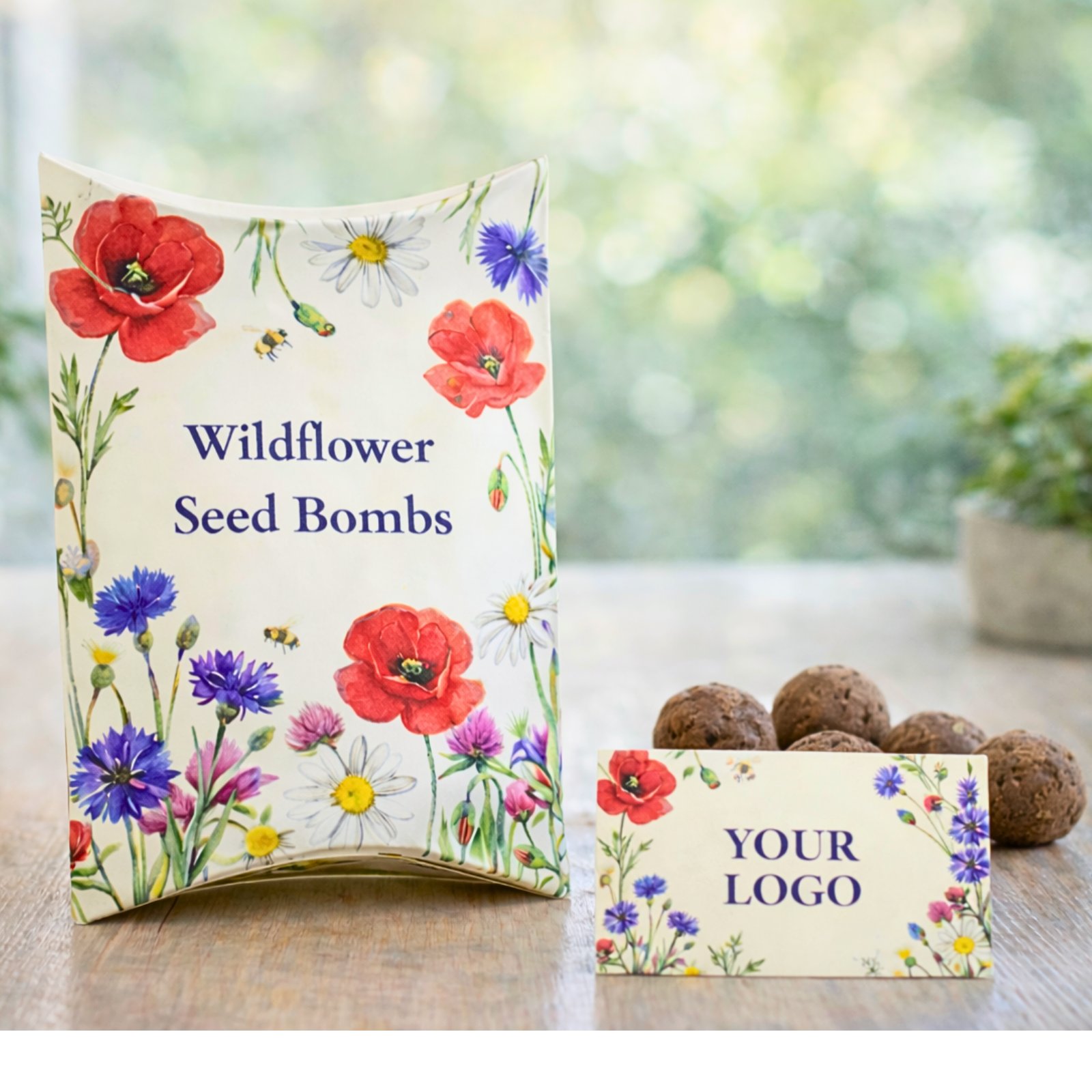
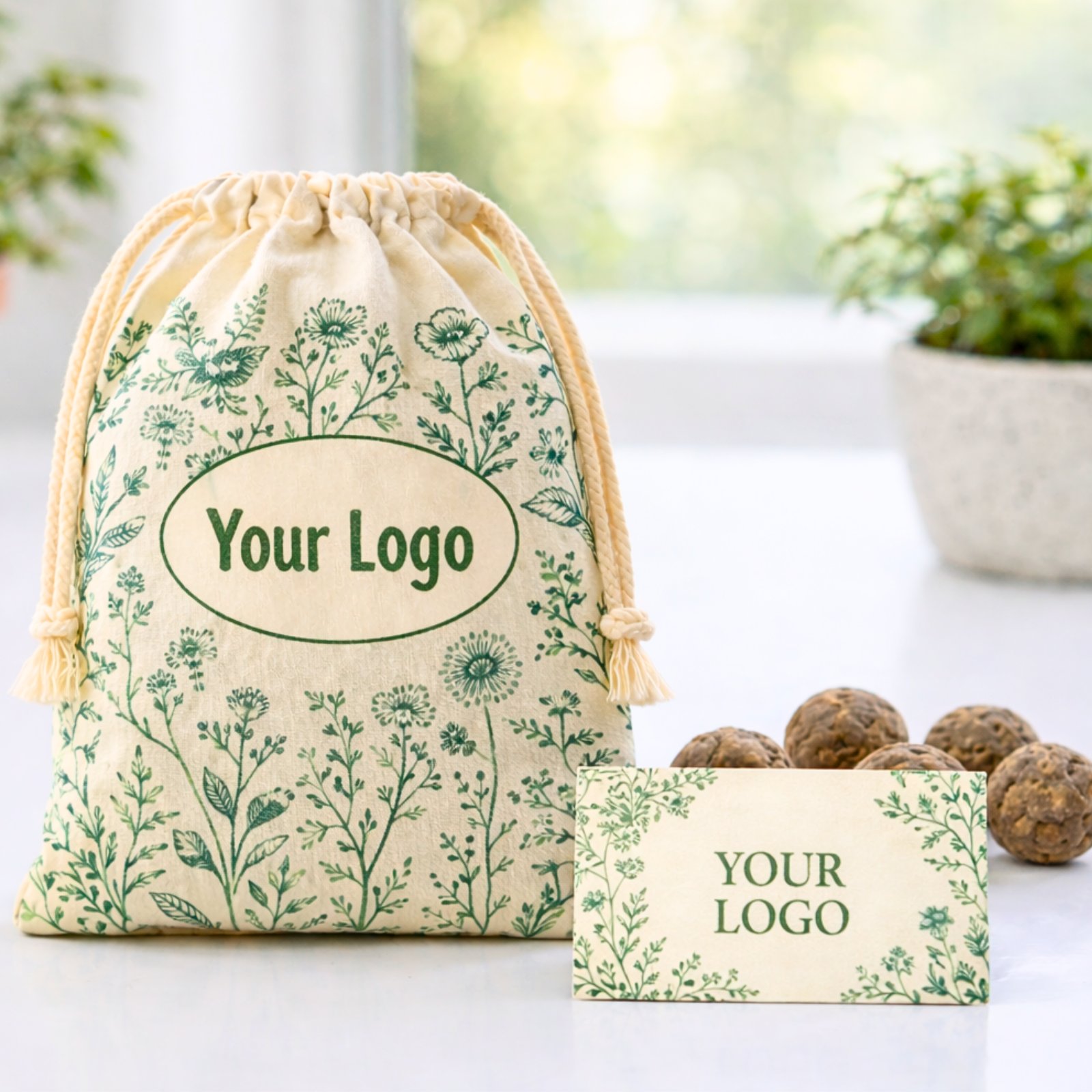
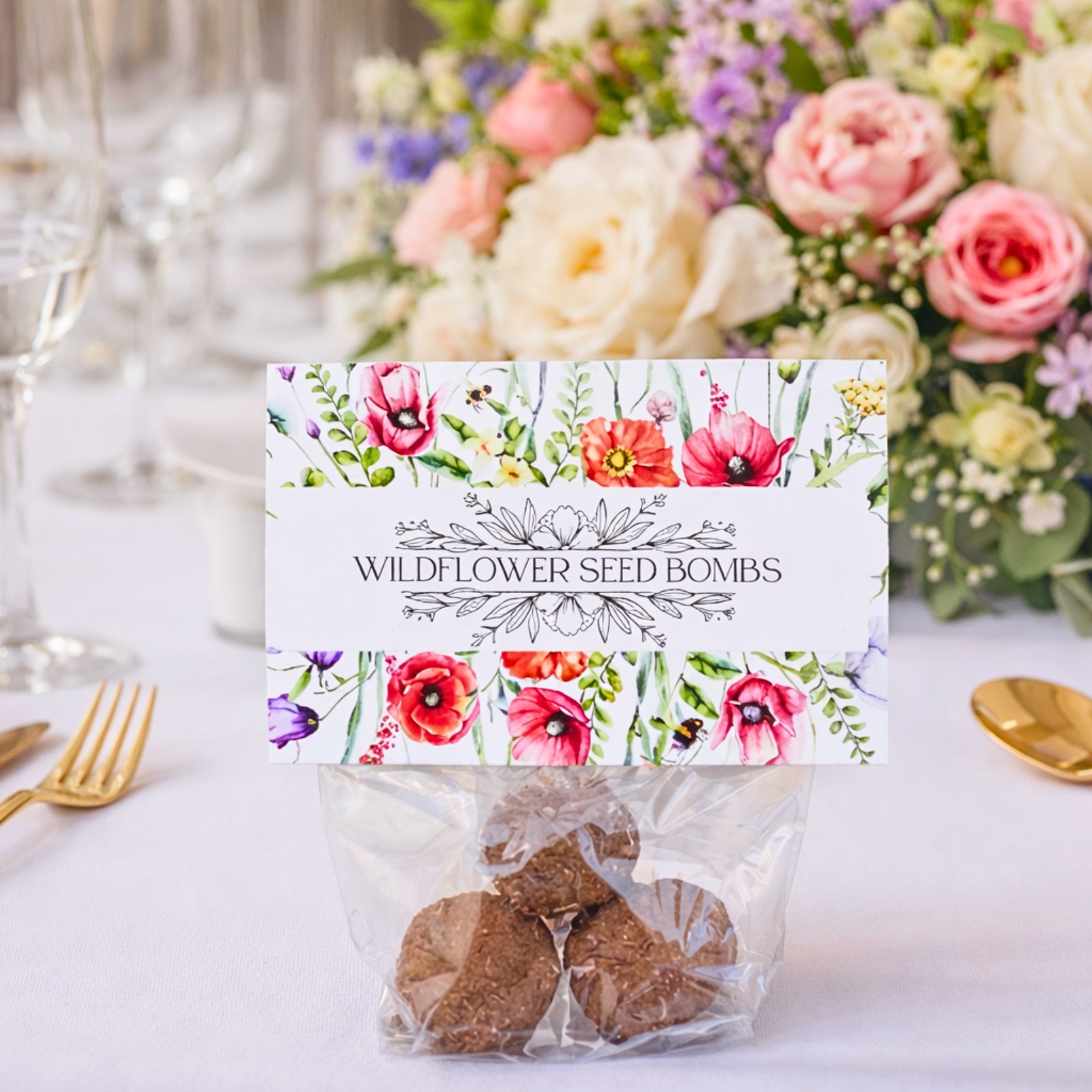
Wildflower seed bomb gift presented with custom-branded packaging and planting card

Build around the brief

What can be customised?

The right format depends on the audience, quantity, distribution method and the space needed for your message. Available branded presentation options can include:

  • Custom-printed planting instruction cards
  • Branded pillow boxes and presentation boxes
  • Drawstring gift sacks with coordinated cards
  • Compact hand-tied gifts for events and giveaways
  • Messaging adapted to a campaign, conference or recipient group

Final format, artwork requirements, quantity and timing should be confirmed against your individual brief.

Procurement checklist

Sustainable Promotional Products UK Procurement Checklist

These questions help marketing, procurement and event teams compare options on more than price or appearance.

What exactly is included?
Confirm the product, quantity per gift, packaging, printed elements and any assembly included in the quoted format.
Which claims can be evidenced?
Request specific information for material, seed, packaging or certification claims that will appear in your campaign.
Is it practical for the audience?
Consider how recipients will carry, store, plant or use the item, including any instructions they will need.
What artwork is required?
Confirm available branding areas, file requirements, proofing stages and responsibility for final approval.
What are the order constraints?
Ask for the applicable minimum order, production timing, delivery date and destination before committing.
How should success be assessed?
Choose a realistic campaign measure such as distribution, recipient engagement or follow-up—not an unsupported environmental outcome.

Prepare a useful enquiry

From campaign idea to a confirmed gift format

A clear first brief makes it easier to identify a suitable option and confirm what is achievable for your event or campaign.

Define the use

State the event, campaign or gifting purpose and who will receive the product.

Share the essentials

Include the required quantity, delivery location and the date the gifts are needed.

Explain the branding

Describe the logo, message, colours and any planting or campaign information to include.

Confirm the details

Review the recommended format, artwork requirements, order terms and delivery timing before approval.

Buyer questions

Sustainable Promotional Products UK: Frequently Asked Questions

What are sustainable promotional products?

The phrase is commonly used for promotional items selected with environmental considerations in mind. Buyers should look beyond the label and assess the materials, packaging, intended use, disposal route and evidence supporting each claim.

Are seed bombs suitable for trade shows and conferences?

They can suit events where a compact branded gift and a simple planting action are relevant to the audience. The format should include clear instructions and be checked against the event’s distribution and packing requirements.

Can a company logo and campaign message be added?

Branding options are available across planting cards and selected gift packaging. The available print area and final presentation depend on the chosen format, so these should be confirmed during the enquiry.

How far ahead should we enquire?

Production requirements vary by format, quantity, artwork and delivery destination. Send your event date and brief as early as possible so the team can confirm whether the requested timing is achievable.

Are wildflower seed bombs guaranteed to flower?

No seed product can guarantee germination or flowering because results depend on site preparation, planting conditions, weather, watering and ongoing care. Recipients can follow the wildflower seed bomb planting guide for practical instructions.

Explore the available formats

Planning a UK event, campaign or business gift?

Browse the branded wildflower seed bomb gift catalogue, then send the team your quantity, delivery date, destination and branding requirements.

Prefer to call? 01536 614062
Read More
Customized Wedding Favour UK
Wildflower Seed bomb

Wedding Favour Gifts

UK wedding favour guide

Wildflower Wedding Favours UK

Personalised wildflower seed bomb gifts offer your guests a thoughtful thank-you they can take home and plant. This guide explains the available presentation styles and what to confirm before ordering.

Personalised presentation options Planting instructions for guests Formats for place settings Details confirmed before ordering
Wildflower seed bomb wedding favour presented with floral card and clear plant-based bag

A thank-you with a next step

Why choose seed bomb wedding favours?

A well-chosen favour should suit your day, be easy to give to guests and explain clearly what they can do with it afterwards.

A useful thank-you

Guests receive a small gift with a simple follow-up action: take it home, prepare a suitable area and plant it.

Personal to your day

Selected formats can be personalised with names, a wedding date or a short message, subject to the available print area.

Easy to present

Compact favour styles can be arranged at place settings, displayed on a favour table or added to guest welcome bags.

Clear for guests

A planting card helps guests understand what they have received and how to give the seeds suitable growing conditions.

Choose the presentation

Four wildflower wedding favour styles to consider

The UK wedding collection includes several presentation formats. Contents and personalisation vary, so confirm the exact specification for the design you select.

Simple

Hand-tied favours

A compact seed bomb gift paired with a printed card for a light, easy-to-place presentation.

Gift box

Pillow-box favours

A shaped gift box that provides a larger visual area for the wedding design and accompanying information.

Floral

Gift-pouch favours

A decorative pouch option that can coordinate with floral table styling and include a planting card.

Keepsake

Mini cotton sacks

A drawstring presentation format for larger seed bomb sets, with planting guidance supplied for guests.

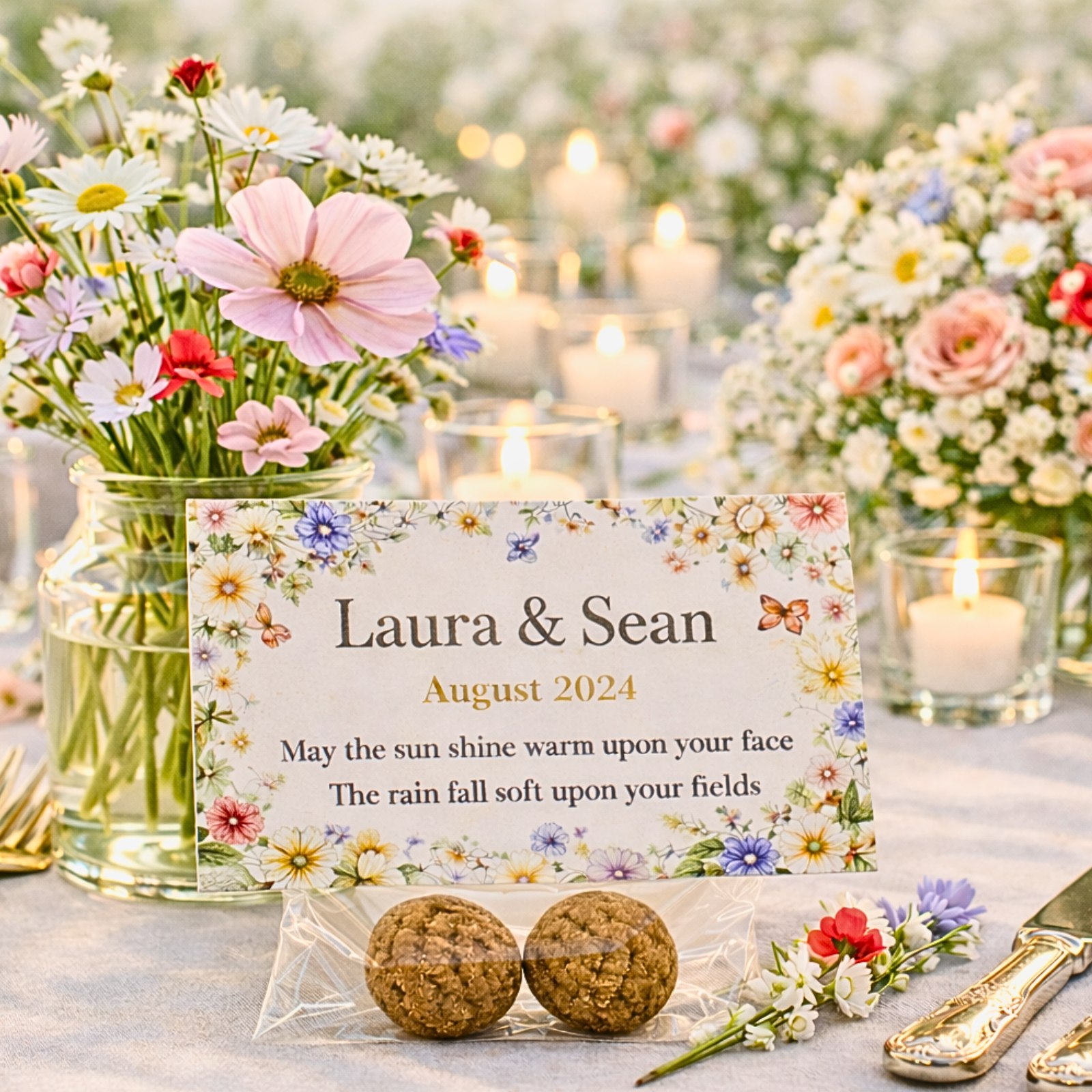
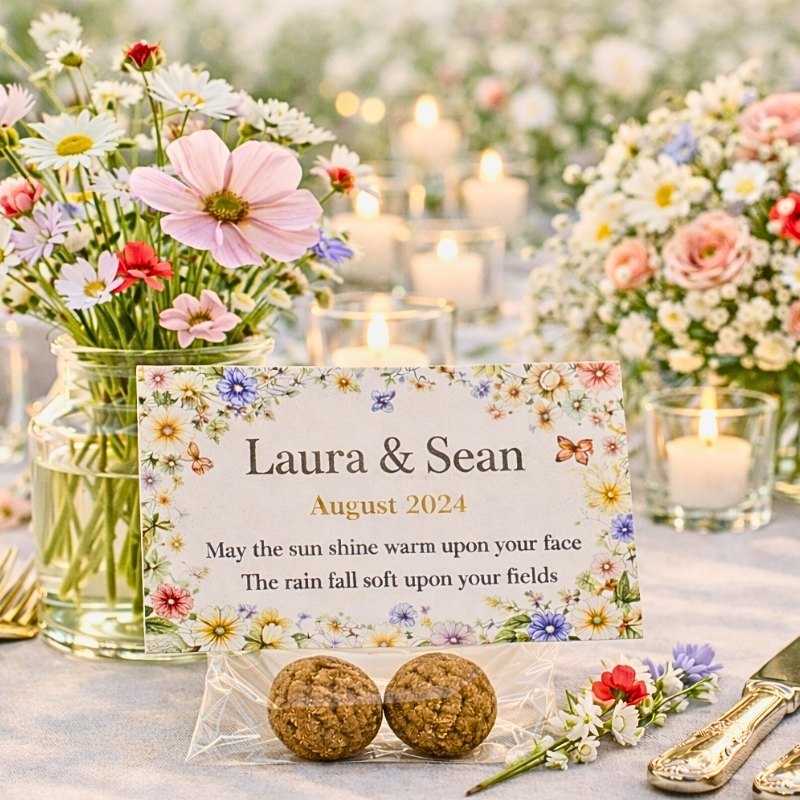
Example of a personalised wildflower seed bomb wedding favour card with names, date and message

Make the favour your own

What can be personalised?

Personalisation depends on the favour format and available print area. Your first brief can include the details you would like the design to carry, such as:

  • Your names and wedding date
  • A short thank-you, quotation or wedding message
  • Your preferred colour palette or floral style
  • Planting guidance for guests
  • The favour format and number of seed bombs required

Final artwork, wording, contents, quantity and delivery timing should be confirmed before production.

Wedding planning checklist

What to confirm before ordering wedding favours

These practical questions help avoid uncertainty when comparing formats and preparing your enquiry.

What is included in each favour?
Confirm the number of seed bombs, packaging style, printed card, planting instructions and any assembly included.
How many favours are required?
Work from your guest plan and decide whether each person, couple, household or place setting will receive one.
Is personalisation needed?
Prepare the exact names, date and message, then check spelling carefully when reviewing the artwork proof.
How will they be displayed?
Consider place settings, guest bags or a favour table so the size and packaging suit your venue plan.
When are they needed?
Share your wedding date and preferred delivery date early so artwork, production and delivery requirements can be checked.
What will guests need to know?
Make sure the chosen format includes clear planting and care guidance rather than leaving guests to guess.

Prepare your enquiry

From wedding idea to a confirmed favour

A clear first message helps the team understand your preferred presentation and check what is achievable for your date.

Choose a style

Select one or two favour formats from the wedding collection that best suit your tables and theme.

Estimate quantity

Share the number required and explain whether the favours are for individual guests, couples or households.

Send your details

Include your wedding date, delivery location, names, message and preferred design direction.

Confirm before order

Review the recommended format, artwork, contents, ordering terms and delivery timing before approval.

Set realistic expectations

A favour your guests can plant

Wildflower seed bombs are a planting product, so results depend on ground preparation, growing conditions, weather, watering and care. Germination or flowering cannot be guaranteed.

Giving guests clear instructions makes the gift easier to understand and helps them choose a suitable place to plant it.

Read the Planting Guide

Wedding favour questions

Wildflower wedding favours: frequently asked questions

What is a wildflower seed bomb wedding favour?

It is a small guest gift containing one or more wildflower seed bombs, presented in a card, pouch, box or sack format. Planting guidance can be included so guests understand how to use it.

Can wedding favours be personalised?

Selected formats can be personalised. Depending on the design and print area, this may include names, a wedding date, a short message and coordinated styling. Confirm the available options for your chosen format.

How many wedding favours should we order?

That depends on how you plan to give them. Some couples provide one per guest, while others give one per couple, household, place setting or welcome bag. Base the quantity on your guest plan and allow for any additions or replacements you consider necessary.

How far ahead should we enquire?

Production needs vary with the chosen format, quantity, artwork and delivery destination. Enquire as early as practical and include both your wedding date and preferred delivery date so the team can confirm whether the timing is achievable.

Can guests plant seed bomb favours at any time of year?

Suitable timing and care depend on local conditions. Spring is a strong planting period; later planting may require more attention to moisture, while autumn or winter planting depends on the soil being workable. Guests should follow the planting guide and respond to the conditions where they live.

Are wildflower seed bombs guaranteed to flower?

No. Germination and flowering depend on factors outside the product itself, including site preparation, weather, water and ongoing care. Clear planting instructions help guests provide more suitable growing conditions.

Explore the wedding collection

Ready to choose your wildflower wedding favours?

Browse the available seed bomb favour formats, then email the team with your preferred style, quantity, wedding date, delivery location and personalisation ideas.

Prefer to call? 01536 614062

Read More
Wildflower Seed bomb

How to Plant Wildflower Seed Bombs for a Beautiful Wildlife-Friendly Garden

UK wildflower growing guide

Native British Wildflower Seed Bomb Mix

Explore wildflower seed bombs made with our current 31-species native British wildflower mix. Understand the difference between annual and perennial wildflowers, and learn how to give seed bombs suitable conditions in UK gardens, pots and raised beds.

31 wildflower species 4 annual species 27 perennial species No grasses in the mix
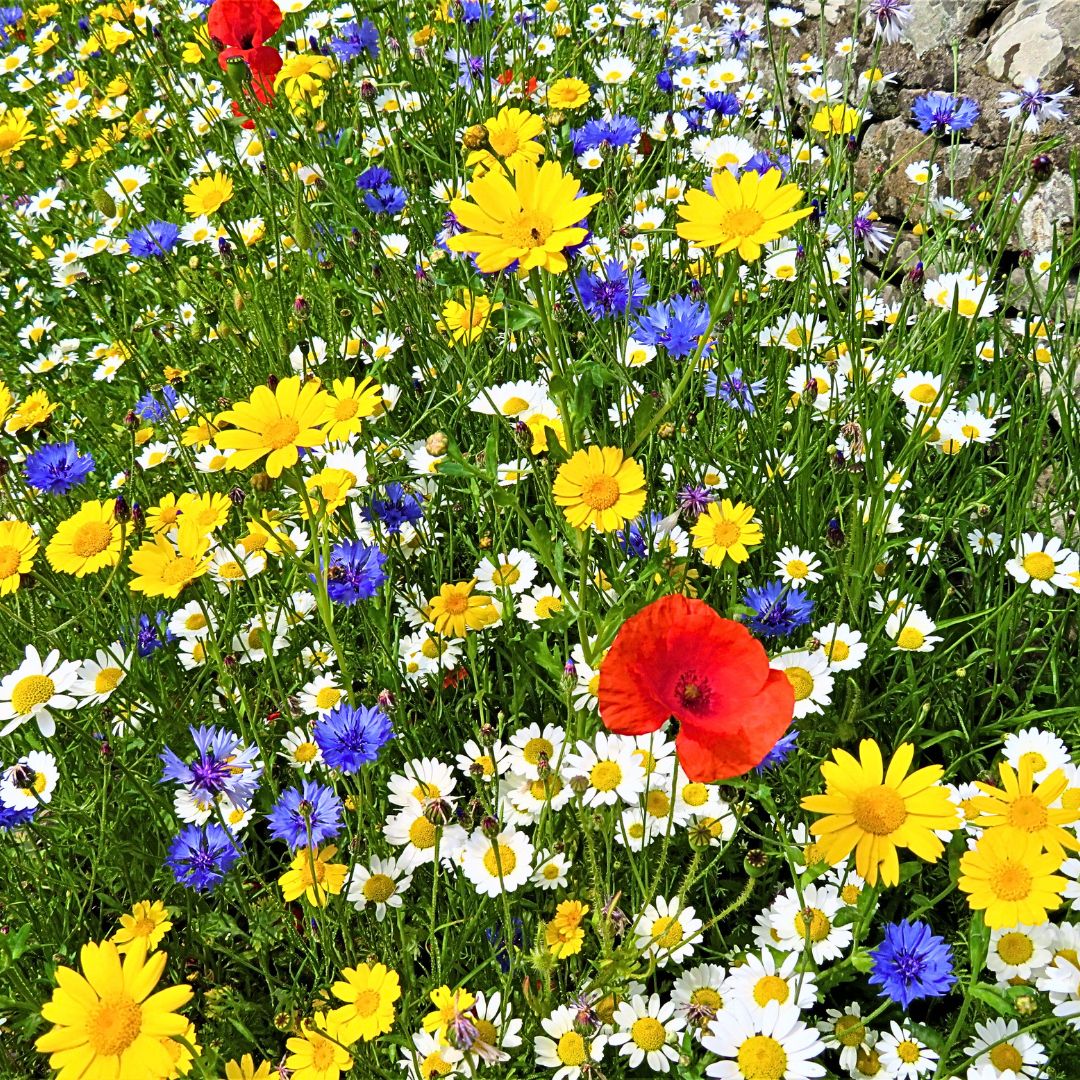
Wildflower seed bombs with colourful British wildflowers including cornflowers, poppies and daisy-form flowers

Know what you are planting

What’s inside our wildflower seed bombs?

Our wildflower seed bombs contain a current mix of 31 named wildflower species. Separating annuals from perennials makes it easier to understand why different plants may appear at different stages.

Named species

The mix combines a broad selection of annual and perennial wildflowers rather than relying on a single flower type.

Annuals

Annual plants complete their life cycle over one growing season and may flower in their first suitable season.

Perennials

Perennial plants can take longer to establish and may return in later seasons where conditions and care are suitable.

No grasses

The confirmed product mix contains wildflower species only and does not include grass species.

A mixed growing timeline

Annual and perennial wildflowers behave differently

Wildflower planting is a process rather than an instant result. Conditions affect what appears and when, so observe the area across more than one growing season.

Stage 1

Germination

Timing varies by species and conditions. Consistent moisture and contact with prepared soil are important during establishment.

Annuals

Earlier colour

Annual species may flower during their first suitable growing season, with timing and performance shaped by local conditions.

Perennials

Longer establishment

Some perennial species may initially concentrate on roots and leaves before flowering in a later season.

Ongoing

Observe and manage

Water during dry establishment periods, limit competing growth and adapt care to the conditions in your planting area.

Current product specification

Wildflower seed bombs: complete 31-species list

The wildflower seed bombs mix currently contains four annual species and 27 perennial species, listed below.

Annual wildflowers — 4 species

  • Chamomile
  • Corn Marigold
  • Cornflower
  • Poppy

Perennial wildflowers — 27 species

  • Betony
  • Birdsfoot Trefoil
  • Clustered Bellflower
  • Devil’s-bit Scabious
  • Field Scabious
  • Dark Mullein
  • Greater Knapweed
  • Kidney Vetch
  • Lady’s Bedstraw
  • Lesser Knapweed
  • Meadow Buttercup
  • Meadow Cranesbill
  • Meadow Vetchling
  • Oxeye Daisy
  • Plantain
  • Purple Loosestrife
  • Ragged Robin
  • Red Campion
  • Red Clover
  • Selfheal
  • St John’s Wort
  • Toadflax
  • Tufted Vetch
  • Viper’s Bugloss
  • Wild Carrot
  • Wild Marjoram
  • Yarrow
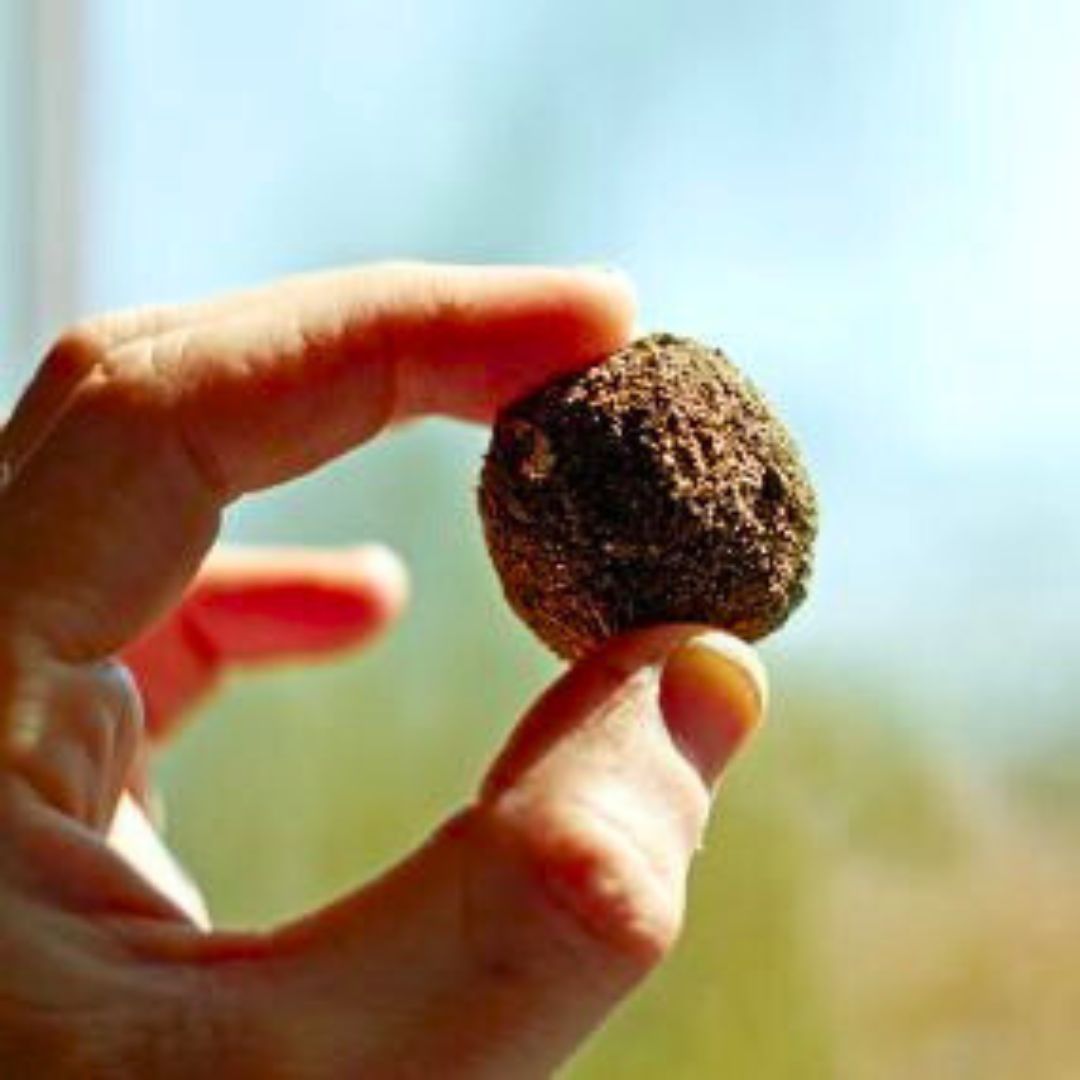
Wildflower seed bomb held between two fingers before planting

Choose the site first

Where can wildflower seed bombs be planted?

Choose a location you own or have permission to use. The best option is a manageable space where you can prepare the surface, monitor moisture and reduce competition from established vegetation.

  • A prepared garden border or dedicated wildflower patch
  • A raised bed with suitable drainage and soil depth
  • A sufficiently deep outdoor container or large plant pot
  • A cleared section of lawn where competing growth is controlled
  • An approved school, workplace or community planting area

Plant seed bombs on land you own or in locations where the landowner or responsible organisation has given permission.

Practical planting method

How to plant wildflower seed bombs in five steps

Follow the instructions supplied with your product and adapt watering to the weather and conditions in your chosen space.

Select the area

Choose an authorised location you can prepare, water and observe.

Prepare the surface

Reduce dense grass and weeds so the seed bombs can contact exposed soil.

Position the bombs

Place them on the prepared surface at the spacing stated in the current instructions.

Water carefully

Keep the area moist during establishment without leaving it waterlogged.

Monitor growth

Watch for competing plants, dry conditions and changes across the seasons.

Plant for conditions, not promises

What results should you expect from wildflower seed bombs?

Growing outcomes naturally vary with seed viability, soil contact, light, moisture, temperature, competition, weather and aftercare.

Give the planting area time. Annuals may provide earlier colour, while some perennials can take longer to establish and may become more visible in later seasons.

For wider guidance on planning and establishing a wildflower area, read the Royal Horticultural Society guide to creating wildflower meadows .

Explore Wildflower Seed Bombs

Growing questions

Native British wildflower seed bomb mix: FAQs

How many wildflower species are in the mix?

The confirmed current mix contains 31 named wildflower species: four annuals and 27 perennials. It contains no grass species.

What does “native British wildflower” mean?

In this product description, it refers to the wildflower species included in the confirmed British mix. If seed origin or geographical provenance is important for a conservation or professional project, request that information before ordering rather than assuming it from the word “native”.

When should wildflower seed bombs be planted?

Spring and autumn are commonly suitable planting periods. Later spring or summer planting may need closer attention to watering, while autumn or winter planting depends on the soil being workable and local conditions being suitable.

Can seed bombs be planted in pots?

They can be used in sufficiently deep outdoor pots and containers with suitable soil, drainage, light and watering. Because the mix contains many species, not every plant will suit or establish in every container.

Will every species flower in the first year?

Annual and perennial species develop at different rates, and conditions affect germination and flowering. Some perennials may establish leaves and roots before flowering in a later season.

What affects wildflower seed bomb germination?

Germination depends on preparation, weather, water, temperature, competition and ongoing care. Follow the wildflower seed bomb planting guide and respond to the conditions in your location.

Start your wildflower growing project

Ready to plant wildflower seed bombs?

Explore the available wildflower seed bomb formats, then use the planting guide to prepare your garden, raised bed or container before planting.

Prefer to call? 01536 614062

Read More
Sustainable branded gifts for UK business events featuring wildflower seed bombs
Wildflower Seed bomb

Sustainable Branded Gifts for UK Business Events

UK corporate event and exhibition guide

Sustainable Branded Gifts for UK Business Events

Sustainable branded gifts can give UK event teams a useful alternative to conventional promotional merchandise. Customised wildflower seed bomb gifts combine a brand message with a clear recipient action, making them suitable for selected trade shows, corporate events, exhibitions and marketing campaigns. This guide explains how to compare the options while keeping environmental statements specific and supportable.

Trade show giveaways Conference delegate gifts Corporate event packs Post-event campaigns
Sustainable branded gifts for UK business events featuring a wildflower seed bomb gift box and custom-logo card

Rethink the merchandise brief

How should UK teams assess sustainable branded gifts?

Branded pens, mugs and keyrings can still be useful when they match the audience and purpose. The better question for an events or marketing team is whether the chosen item will be relevant, clearly explained and consistent with the organisation’s own procurement and ESG objectives.

Audience relevance

Choose for the delegates, visitors or clients you expect to meet—not simply because an item has traditionally been ordered.

Campaign purpose

Define the role of the gift: attract a conversation, support a delegate pack, thank a client or prompt post-event engagement.

Product evidence

Confirm what is included, the relevant material and packaging details, and the evidence behind each environmental statement.

Message value

Use the branded card or packaging to connect the gift to the event, campaign theme and action you want the recipient to take.

Event logistics

Consider transport, stand storage, handout speed, delegate bags, onward travel and any follow-up information recipients need.

A branded gift with a next action

Where seed bomb gifts can support UK events and exhibitions

Promotional seed bombs combine your message with something the recipient can plant after the event. Their strongest use is as one considered part of the campaign—not as a substitute for a complete sustainability or ESG strategy.

Exhibitions

Trade show giveaways

A compact branded handout for relevant stand visitors, with planting guidance and a message linked to the exhibition campaign.

Conferences

Delegate and speaker gifts

A customised addition to selected delegate packs, welcome desks or speaker gifts where the item suits the audience and venue.

Corporate events

Launch and partner gifts

A branded format for product launches, partner meetings and client events, with artwork tailored to the occasion.

Follow-up

Post-event mailers

A carefully targeted follow-up gift that can reconnect a conversation to useful planting information and a clear campaign action.

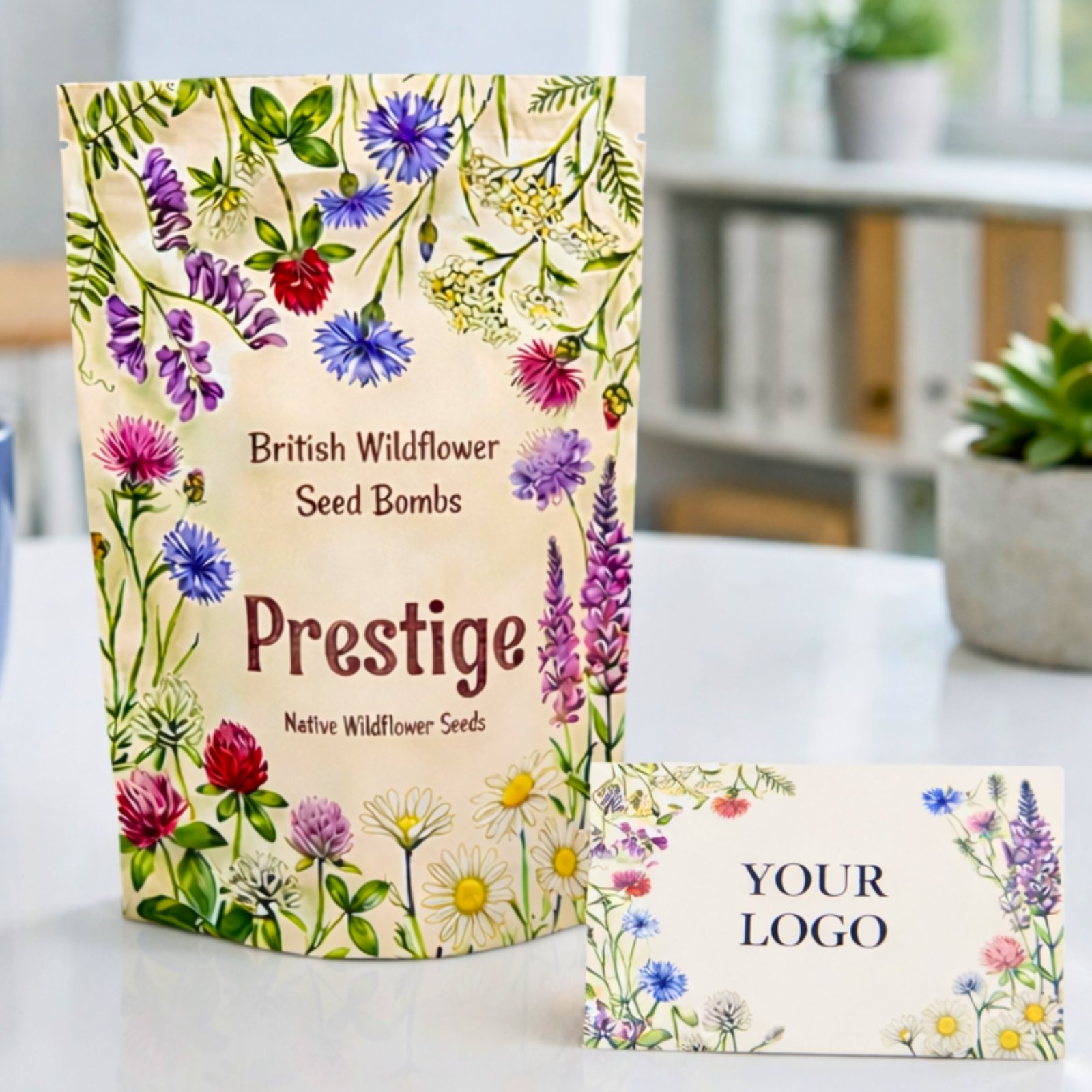
British wildflower seed bomb gift box displayed with a coordinated custom-logo card

Customise for the campaign

How can sustainable branded gifts be customised?

Contents, print area and presentation depend on the selected format. Options shown in the current UK promotional gift collection can include:

  • One or more wildflower seed bombs, depending on the format
  • A customised planting card featuring your logo and approved message
  • Selected hand-tied, pillow-box or presentation-box styles
  • Selected cotton drawstring gift-sack formats
  • Event, exhibition or campaign messaging adapted to the audience

Confirm the precise contents, material statements, artwork requirements, quantity and timing for the individual option you select.

Connect marketing with procurement

How can event merchandise support ESG objectives responsibly?

A promotional product can support a considered procurement policy, but it does not prove an ESG outcome by itself. Give marketing, procurement and sustainability colleagues the specific information they need to assess and approve the selected format.

Define the objective
Record why the merchandise is being ordered, who will receive it and what useful recipient action or campaign outcome is intended.
Compare the options
Compare the proposed gift with the pens, mugs, keyrings or other merchandise normally ordered, using the same audience, quantity and logistics brief.
Check product details
Confirm exact contents and use specific information for the selected packaging rather than applying one general statement to every option.
Qualify green claims
Explain precisely which part of the product a claim covers. Avoid broad terms such as “eco-friendly” unless the full meaning can be substantiated.
Keep evidence
Request current evidence for any material, seed-origin, certification or environmental statement used in internal approvals or external marketing.
Measure honestly
Measure controllable activity such as qualified gifts distributed, QR visits, enquiries or recipient engagement—not assumed planting or environmental outcomes.

Plan before the exhibition

From event objective to approved branded gift

A clear brief helps marketing, procurement and the supplier confirm a suitable format, accurate wording and an achievable delivery plan.

Define the audience

State the event, expected recipient, reason for gifting and action you want the recipient to take afterwards.

Share event logistics

Include the estimated quantity, venue or delivery destination, handout method, event date and required delivery date.

Plan the branding

Provide the logo, approved wording, brand colours, campaign call to action and any planting information required.

Verify and approve

Check the format, exact contents, artwork, accessibility, supported environmental claims, order terms and delivery timing.

Corporate event questions

Sustainable branded gifts for UK events: FAQs

Are UK businesses required to stop using branded pens, mugs or keyrings?

No. There is no general UK rule banning these promotional products. Businesses can decide whether conventional merchandise remains useful for a particular audience. What matters legally is that environmental claims made about any alternative are clear, accurate, complete and supported by evidence.

What do the UK green-claims rules mean for event marketing?

Claims should explain the specific environmental feature being promoted and should not hide important qualifications. Marketing teams should hold credible, relevant and current evidence before publishing a claim, including claims printed on event materials or branded packaging.

How can promotional gifts relate to a company’s ESG objectives?

They can form one small part of a wider responsible-procurement or stakeholder-engagement programme. The selected product should be assessed against the organisation’s own policy and evidence requirements. Do not claim that one gift delivers or proves an ESG result.

Can a company logo and exhibition message be added?

Branding options are available across planting cards and selected gift packaging. Print space and presentation depend on the chosen format, so the exact logo, wording, artwork and call-to-action requirements should be confirmed during the enquiry.

Are minimum quantities and lead times the same for every format?

No. Requirements vary by gift format, quantity, artwork and delivery destination. Send the event date, required delivery date and estimated quantity as early as practical so the applicable minimum order and timing can be confirmed.

What information should be included in a trade show enquiry?

Include the event name and date, recipient group, estimated quantity, required delivery date, destination, preferred format, distribution plan and the branding or campaign message you would like included.

Are wildflower seed bombs guaranteed to flower?

No seed product can guarantee germination or flowering because results depend on site preparation, planting conditions, weather, watering and ongoing care. Recipients can follow the wildflower seed bomb planting guide for practical instructions.

Plan your next UK event

Preparing for a corporate event, conference or trade show?

Browse the customised wildflower seed bomb gift collection, then send the team your event, audience, quantity, delivery date and branding requirements.

Prefer to call? 01536 614062
Read More
Discover UK wildflower seed bombs: a unique way to grow native British wildflowers
Wildflower Seed bomb

What is a Wildflower Seed Bomb?

A simple UK growing guide

What Is a Wildflower Seed Bomb?

A wildflower seed bomb is a small, ready-formed ball that holds wildflower seeds in a soil-based mixture. It offers a simple way to position seeds on prepared ground—but successful growing still depends on the site, weather, moisture and aftercare.

What seed bombs contain How seed bombs work Where they can be planted What results to expect
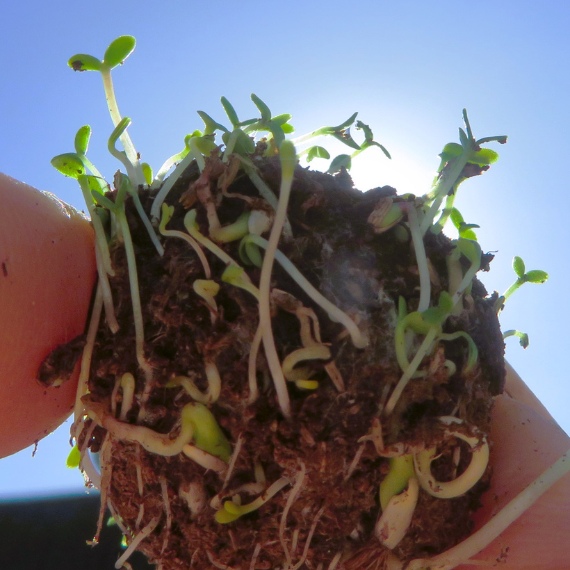
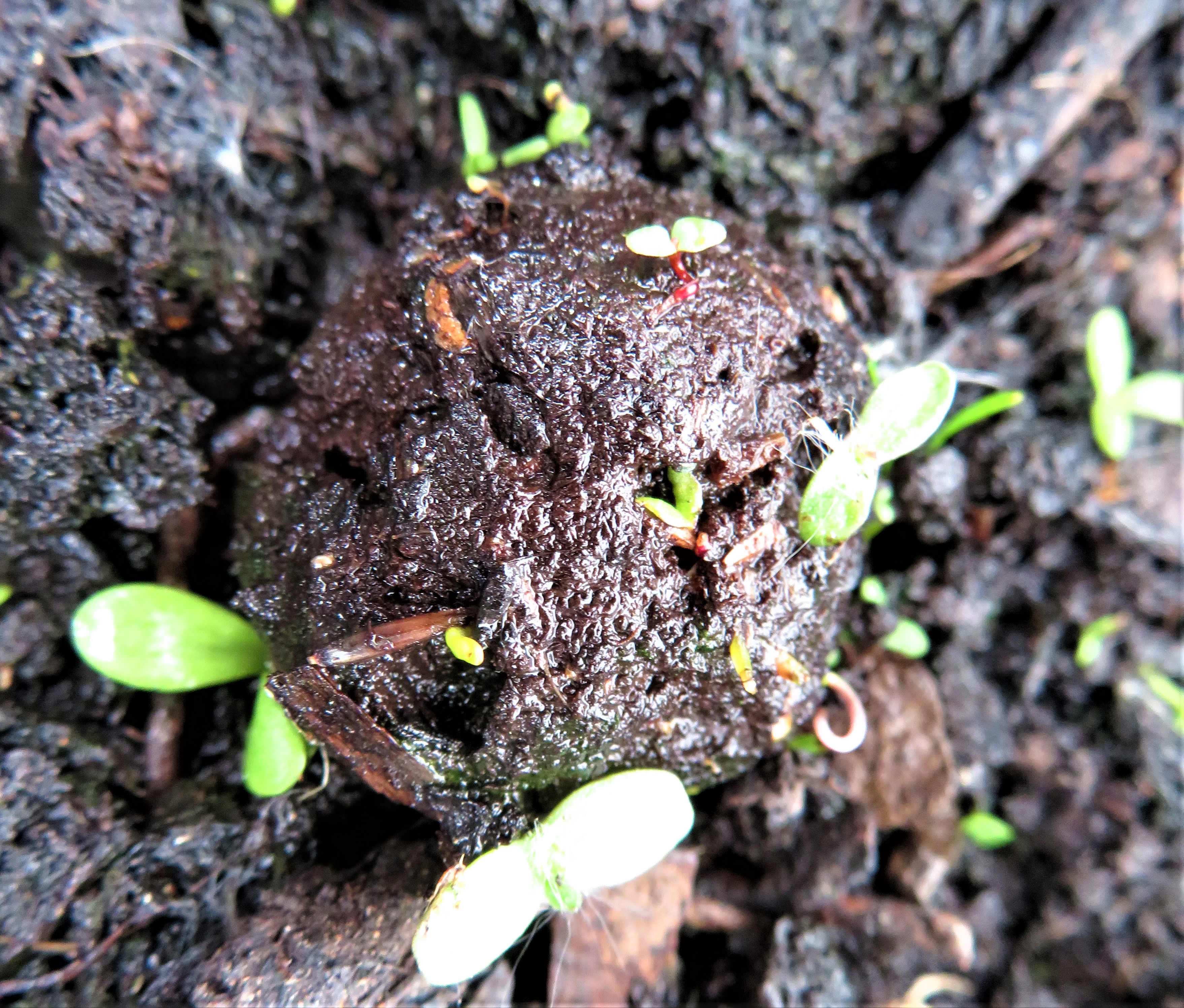
Wildflower seedlings emerging from a seed bomb on prepared soil

The basic idea

What is inside a seed bomb?

Seed bomb recipes and product specifications vary. In its simplest form, the ball keeps a measured group of seeds together until it is placed in a suitable growing area.

Wildflower seeds

The seed selection determines which plants may establish. Species, seed origin and suitability should be checked for the intended location.

Soil-based mixture

The surrounding mixture holds the seeds together in a compact form. Ask the supplier for exact product information when materials are important.

A ready-formed ball

The finished ball is easy to position individually, making it practical for gardens, pots, schools, community projects and gifts.

From seed bomb to seedling

How does a wildflower seed bomb work?

A seed bomb does not remove the need for normal growing conditions. It provides a convenient seed format; the gardener still provides the right place and care.

Place

Position the seed bomb on prepared soil in a location you own or have permission to use.

Moisten

Rain or careful watering softens the ball and helps bring its contents into contact with the soil.

Germinate

Seeds may germinate when moisture, temperature, light and other species-specific conditions are suitable.

Establish

Young plants need time, moisture and reduced competition while their roots and leaves develop.

Wildflower seed bomb held between two fingers before planting

Good preparation matters

How do you plant a wildflower seed bomb?

The popular idea of throwing seed bombs anywhere and walking away is unreliable and may be inappropriate. A manageable, authorised area gives you the opportunity to prepare the soil and care for emerging seedlings.

  • Choose a garden, pot, raised bed or approved community space
  • Reduce dense grass, weeds and other competing growth
  • Expose enough soil for the seed bomb to make good surface contact
  • Place the seed bombs at the spacing stated in the current instructions
  • Water during dry establishment periods without waterlogging the area
  • Observe the site and manage competition as seedlings develop

Choose the location first

Where can seed bombs be planted?

Select a space where the species are suitable, the soil can be prepared and somebody can monitor moisture and competing growth.

Garden borders

Use a cleared, manageable section with suitable light and soil conditions.

Large outdoor pots

Choose a sufficiently deep container with drainage, suitable soil and regular care.

Raised beds

Dedicate an area where seedlings will not be crowded by established plants.

Approved projects

Schools, workplaces and community groups should agree the site and ongoing care first.

A growing process, not an instant result

What should you expect after planting?

Some seeds may germinate sooner than others, and annual and perennial wildflowers can develop on different timescales. Perennials may spend an early stage developing roots and leaves before flowering in a later suitable season.

No seed product can guarantee germination, flowering, timing or a particular species balance. Results are influenced by seed viability, soil contact, moisture, light, temperature, weather, competition and aftercare.

Seed bomb questions answered

Wildflower seed bomb FAQs

What is the difference between a seed bomb and a seed ball?

The terms are commonly used for the same broad idea: seeds held together in a small, ready-formed ball. The precise seeds, surrounding materials, size and planting instructions can differ between products.

Do seed bombs need to be buried?

Follow the instructions supplied with the product. Seed Bomb Shop’s method is to position them on a prepared surface where they can contact exposed soil, rather than burying them deeply.

Can I throw wildflower seed bombs anywhere?

No. Use land you own or have permission to plant. Avoid protected sites, public land and other people’s property without authorisation. Site preparation and follow-up care also improve the opportunity to establish seedlings.

When is the best time to plant wildflower seed bombs in the UK?

Spring and autumn are commonly suitable planting periods. Later spring or summer planting may require closer attention to watering, while autumn or winter planting depends on workable soil and appropriate local conditions.

Can wildflower seed bombs grow in pots?

They can be planted in sufficiently deep outdoor pots or containers with suitable soil, drainage, light and watering. Because a mixed product contains different species, not every plant will suit or establish in every container.

Will every seed bomb germinate and flower?

No. Germination and flowering cannot be guaranteed. Prepare the site, maintain appropriate moisture, manage competing growth and allow time for annual and perennial species to develop at different rates.

Are seed bombs suitable for schools and community groups?

They can provide a practical planting activity when the group has permission, chooses an appropriate site and arranges preparation and aftercare. Adult supervision and any organisation-specific risk checks should be planned for the participants and location.

Start with the right place

Ready to begin a wildflower seed bomb project?

Explore the current UK seed bomb range, then prepare your chosen garden area, raised bed or outdoor container before planting.

Prefer to call? 01536 614062
Read More
how seed bombs work
Wildflower Seed bomb

How Seed Bombs Work

From seed bomb to wildflower

How Seed Bombs Work: A UK Wildflower Guide

Understanding how seed bombs work starts with the small soil-based ball. Each wildflower seed bomb keeps a group of seeds together until it is placed on prepared ground and moistened. The ball then softens, allowing the seeds to begin their normal germination process when conditions are suitable.

Prepared soil contact Suitable moisture Reduced competition Patient aftercare
A wildflower seed bomb beginning to germinate on soil

The growing process

How Seed Bombs Work from Ball to Seedling

A seed bomb is a convenient planting format, not a separate kind of seed. The seeds inside still respond to the conditions required by their individual species.

Position

Place the seed bomb on prepared soil in an authorised location that can be monitored.

Moisture

Rain or careful watering begins to soften the ball and moisten its contents.

Soil contact

As the ball breaks down, its seeds can make contact with the prepared surface below.

Germination

Suitable moisture, temperature and light may trigger germination at species-specific times.

Establishment

Emerging roots and shoots need moisture, space and time while young plants develop.

The conditions still matter

What controls whether seed bombs grow?

The ball brings the seeds together, but it cannot control the planting site or the weather. These four factors have a major influence on establishment.

Soil contact

Dense grass, weeds, leaf litter or hard surfaces can prevent seeds from reaching suitable soil.

Moisture

The area needs appropriate moisture during germination and early establishment, especially in dry weather.

Competition

Established plants can compete with young seedlings for light, water, nutrients and growing space.

Species and season

Different species respond at different times, and local temperature, light and weather affect development.

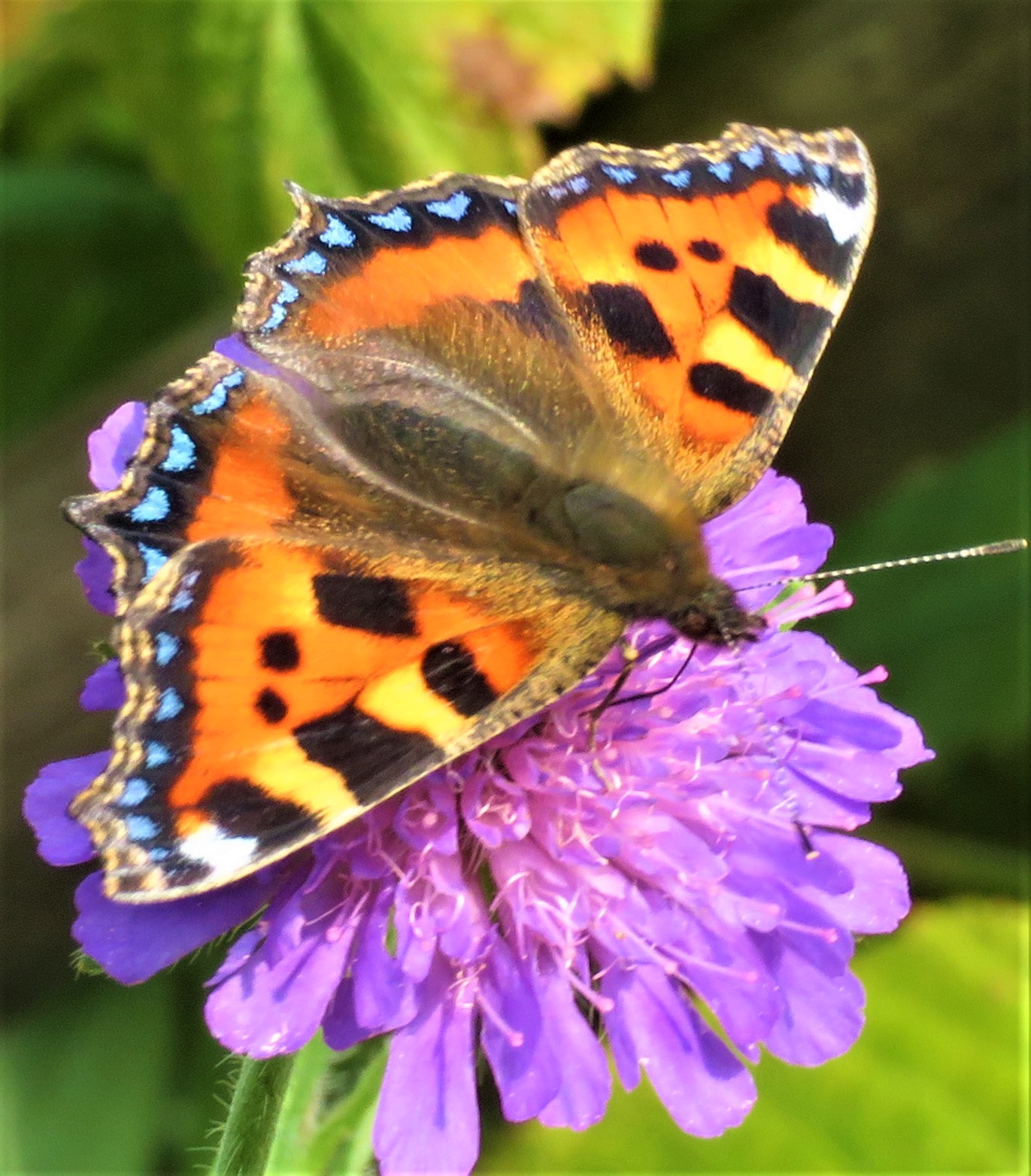
Butterfly visiting a scabious wildflower

Give the seeds a fair start

How to help wildflower seed bombs establish

Understanding how seed bombs work also explains why preparation matters. The most reliable approach is to treat them as a planted seed product rather than something to scatter and forget.

  • Choose land you own or have permission to plant
  • Select a garden area, raised bed or outdoor container suited to the mix
  • Reduce grass, weeds and other dense competing growth
  • Expose soil so each seed bomb has good surface contact
  • Use the spacing supplied with the current product instructions
  • Water when required during dry establishment periods
  • Observe seedlings and continue managing competing plants

For independent guidance on preparing soil, sowing and caring for UK wildflowers, see Kew’s Grow Wild guide to sowing wildflower seeds.

Timings vary

How long do seed bombs take to grow?

There is no single reliable number of days from planting to flowering. A mixed wildflower product contains species with different germination and development patterns.

After planting

The ball begins to soften when it receives enough moisture. Dry conditions can delay this stage.

Germination

Seeds may begin at different times depending on the species, temperature, moisture and light.

Early growth

Young plants may first produce roots and leaves while establishing in the growing area.

Flowering

Annuals may flower in their first suitable season, while some perennials can take longer to establish.

Avoid the common setbacks

Why might a seed bomb fail to establish?

When growth is limited, the reason is often connected to the planting area or conditions rather than the shape of the seed product.

Dense existing grass

Grass can restrict soil contact and compete strongly with emerging wildflower seedlings.

Insufficient moisture

A dry ball or drying soil can interrupt germination and early seedling development.

Unsuitable location

Light, drainage, soil and exposure may not suit every species contained in a mixed product.

Too much competition

Established weeds and vigorous plants can take the space and resources that small seedlings need.

Expecting instant flowers

Germination, leaf growth and flowering are different stages, and perennials may need more time.

No continuing care

Young plants may still require watering, observation and management after the first shoots appear.

Growing questions answered

How seed bombs work: FAQs

Do seed bombs grow as soon as it rains?

Rain can soften the ball and provide moisture, but germination also depends on the individual species, temperature, light, soil contact and other local conditions. One rainfall event does not guarantee growth.

How quickly will seed bomb seedlings appear?

There is no guaranteed timetable. Different species germinate at different rates, while temperature, moisture, planting season and site preparation can speed up or delay visible growth.

Should wildflower seed bombs be buried?

Follow the instructions supplied with the product. Seed Bomb Shop’s method is to position them on prepared soil with good surface contact rather than burying them deeply.

Can seed bombs grow on an existing lawn?

Dense turf can prevent good soil contact and compete with young seedlings. Prepare a cleared section and continue controlling competing grass rather than placing the seed bombs directly into an unchanged lawn.

Do seed bombs need watering?

Natural rainfall may provide enough moisture at times, but dry periods can require careful watering. Keep the establishment area appropriately moist without leaving it waterlogged.

Can seed bombs be scattered on public land?

Do not plant on public land, protected sites or property belonging to somebody else without permission. Choose an authorised site where the species are suitable and aftercare can be provided.

Where can I learn what a seed bomb contains?

Start with our guide to what a wildflower seed bomb is, then review the current product description and species list for the precise option you are considering.

Prepare, place and care

Ready to grow wildflowers from seed bombs?

Choose the planting area first, prepare the soil and explore the current UK wildflower seed bomb range before you begin.

Prefer to call? 01536 614062
Read More
The History of Seed Bombs
Wildflower Seed bomb

The History Of The Seed Bomb

An evidence-led wildflower guide

History of Seed Bombs: From Seed Pellets to Modern Gardening

The history of seed bombs carries us through ancient farming stories, Japanese natural farming and the creative energy of 1970s community gardeners. Writers have linked seed-protection methods across the centuries, while the clearest modern chapters connect clay seed pellets with Masanobu Fukuoka and the seed “green-aids” of New York’s Green Guerillas.

Origins and evidence Masanobu Fukuoka Urban gardening Responsible UK use
A wildflower seed bomb softening and beginning to germinate

An ancient idea, a modern movement

A story carried through farming and creativity

Across cultures and centuries, writers have linked seed-coating and seed-ball methods with the practical idea of protecting seeds before sowing. The journey brings together early agricultural traditions, natural farming and imaginative community planting.

Stories from earlier times

Some accounts connect seed balls with ancient attempts to protect and distribute seeds for food crops and new plant growth, creating an intriguing opening chapter in their story.

Natural farming in Japan

In twentieth-century Japan, Masanobu Fukuoka placed clay seed pellets within a thoughtful natural-farming approach that later reached readers around the world.

Creative urban planting

In early-1970s New York, Liz Christy and the Green Guerillas turned seed-filled “green-aids” into a memorable symbol of community gardening and urban creativity.

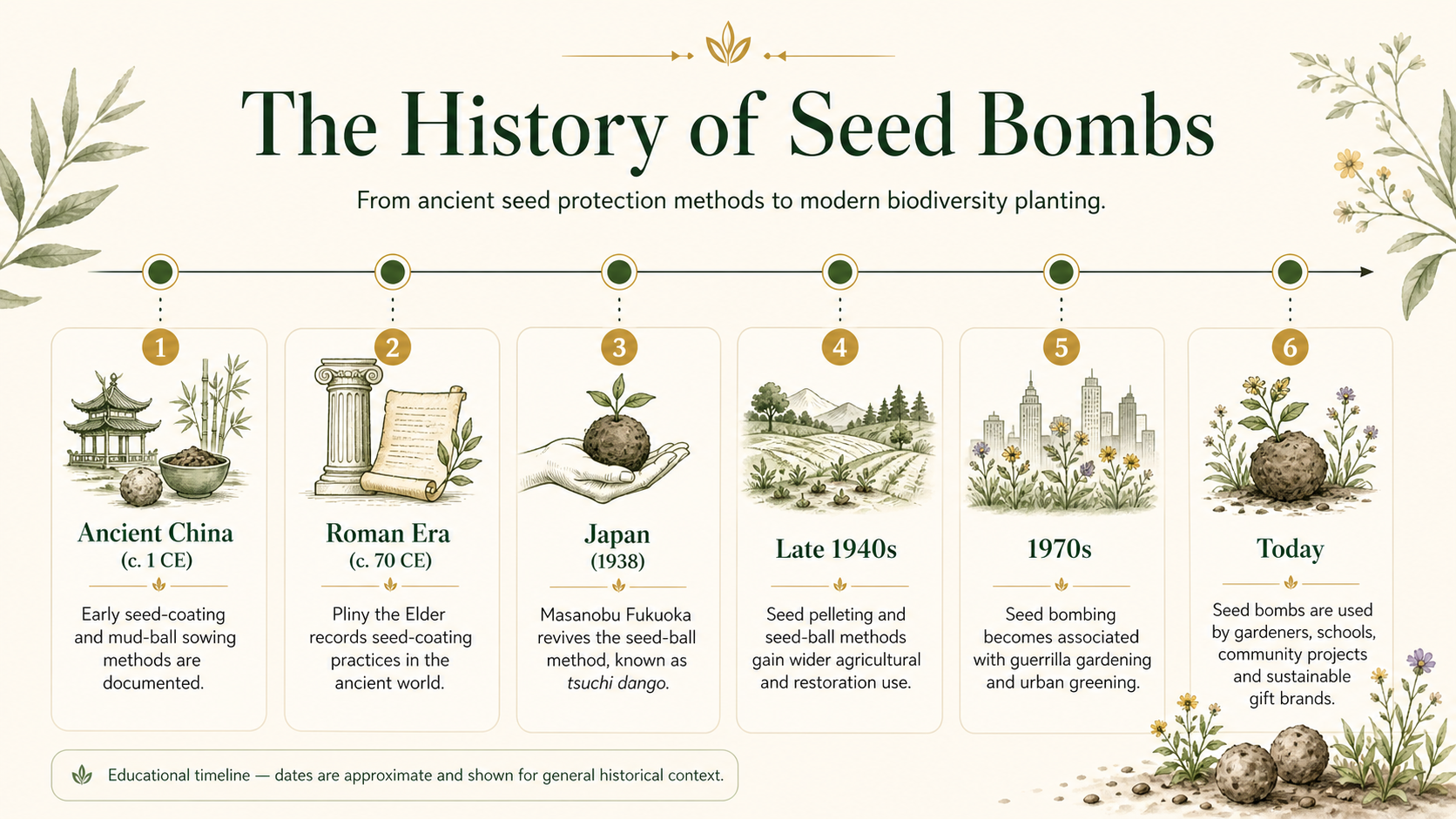
Explore the illustrated journey

The history of seed bombs at a glance

Travel from stories of early seed protection to Japanese natural farming, creative urban planting and the seed bombs used today.

An illustrated journey through stories and milestones commonly associated with seed bombs. Dates are approximate and provide general historical context. On mobile, enlarge the image and swipe across it to read every chapter.

×

A concise timeline

History of seed bombs in four memorable chapters

The modern story connects agricultural seed pellets, natural-farming ideas, community gardening and today’s small-scale wildflower products.

1937

Natural farming begins

Fukuoka’s farm records state that he returned home in 1937 and began developing his natural-farming approach.

1970s

Urban “green-aids”

Green Guerillas used seed-filled projectiles and direct gardening to draw attention to neglected New York spaces.

1978

A wider readership

The English edition of Fukuoka’s The One-Straw Revolution helped introduce his natural-farming philosophy internationally.

Today

A practical format

Seed balls and seed bombs now appear in gardens, education, community projects and carefully planned promotional gifts.

Portrait of Japanese natural farmer Masanobu Fukuoka

A major twentieth-century influence

Masanobu Fukuoka and clay seed pellets

Masanobu Fukuoka (1913–2008) was a Japanese farmer and author whose ideas became influential in natural-farming circles. His farm describes seed pellets made by mixing seeds into clay, drying them and distributing them over the ground. The pellets formed one practical part of his much wider farming philosophy.

Fukuoka described his approach as farming by subtraction: carefully observing natural processes while questioning which interventions were genuinely necessary. The Ramon Magsaysay Award Foundation recognised his natural-farming work with its 1988 Public Service award.

  • He began natural farming in Japan in the 1930s.
  • Clay pellets helped contain and distribute mixed seeds.
  • His books brought the philosophy to a wider international audience.
  • His agricultural context was broader than today’s garden seed bombs.

Watch the story

A short video introduction to seed bomb history

This visual overview explores ancient seed-protection stories and the continuing appeal of seed-based planting. It adds another imaginative perspective to the historical journey.

Video: “Restoring Local Biodiversity with Ancient Seed Secrets”, published on YouTube by AI Business Marketing Solutions. The video explores the wider story, while the dated modern milestones on this page are supported by the linked historical and institutional sources.

The language changed

From seed balls and pellets to “seed bombs”

The terms overlap and each carries its own chapter of the story. Recognising their different settings makes the modern journey easier to understand.

Seed pellets

This term is closely associated with Fukuoka’s agricultural work: seeds held within a dried clay mixture and distributed across land.

Seed “green-aids”

Green Guerillas’ own history records seed-filled projectiles thrown over fences in early-1970s New York as part of a wider community-gardening movement.

Modern seed bombs

Today the name often describes compact seed-and-growing-medium products designed for deliberate placement in gardens, pots and managed projects.

What the history means today

Use wildflower seed bombs responsibly in the UK

This colourful history continues through thoughtful planting today. Modern seed bombs work best as a considered gardening format, placed on suitable ground where planting is permitted.

Ask permission

Use your own garden, a container or a managed site where the landowner or responsible organisation has approved planting.

Choose the mix

Check the species, location and intended result, then select a wildflower mix suited to the conditions and purpose of the planting site.

Prepare the ground

Good soil contact and reduced competition give seeds a more realistic opportunity to germinate and establish.

Provide aftercare

Monitor moisture and emerging seedlings. Results vary with species, soil, weather, timing and continuing care.

History questions

History of seed bombs: frequently asked questions

Who invented seed bombs?

The story has several influential chapters. Seed-protection ideas are associated with early agricultural traditions; Masanobu Fukuoka became a major twentieth-century advocate of clay seed pellets; and Liz Christy and the Green Guerillas helped shape the modern urban seed-bomb story in 1970s New York.

Are seed bombs an ancient invention?

Seed bombs are often linked with ancient seed-protection and sowing traditions. The exact journey from those earlier methods to today’s format is best understood as a fascinating historical connection, followed by clearer modern milestones involving Fukuoka and the Green Guerillas.

Did Masanobu Fukuoka invent the modern seed bomb?

Fukuoka’s farm credits him with creating its seed pellets, and his writing helped spread natural-farming ideas internationally. He is therefore one of the most important modern figures in the story, alongside earlier seed-protection traditions and the later urban gardening movement.

What did the Green Guerillas contribute?

The Green Guerillas formed in New York in the early 1970s. Their own history records “seed green-aids” being thrown over fences into vacant lots, alongside hands-on work to create and support community gardens.

Are seed balls and seed bombs exactly the same?

The terms are often used interchangeably, but formats and purposes vary. Agricultural seed pellets, activist-era seed projectiles and today’s garden products may use different ingredients, seeds and planting methods.

Can I throw seed bombs onto any unused land?

Choose your own garden, a container or an authorised managed space. An area that looks unused may still have an owner or a particular ecological purpose, so permission and a suitable seed mix should guide every planting decision.

Where can I learn how seed bombs grow?

Read our evidence-led guide to how seed bombs work, followed by the practical planting guide.

Continue the story responsibly

Ready to plant wildflower seed bombs?

Explore UK wildflower seed bomb products or follow the planting guide before choosing and preparing your site.

Questions? Email enquiry@seedbombshop.co.uk or call 01536 614062.

Discover more about seed bombs in the UK by exploring our website today.

Read More
Wildflower Seed bomb

Wildflower Seeds for Bees: A Practical UK Guide

A practical UK guide for bee-friendly planting

Wildflower Seeds for Bees A Practical UK Seed Bomb Guide

Wildflower seeds for bees can provide nectar and pollen after the plants establish and flower. Our seed bombs combine a 31-species native British wildflower mix with UK soil and clay, creating a simple planting format for prepared garden soil, pots and authorised community projects.

31 native British wildflower species 4 annuals and 27 perennials Nectar and pollen after flowering Gardens, pots and permitted projects
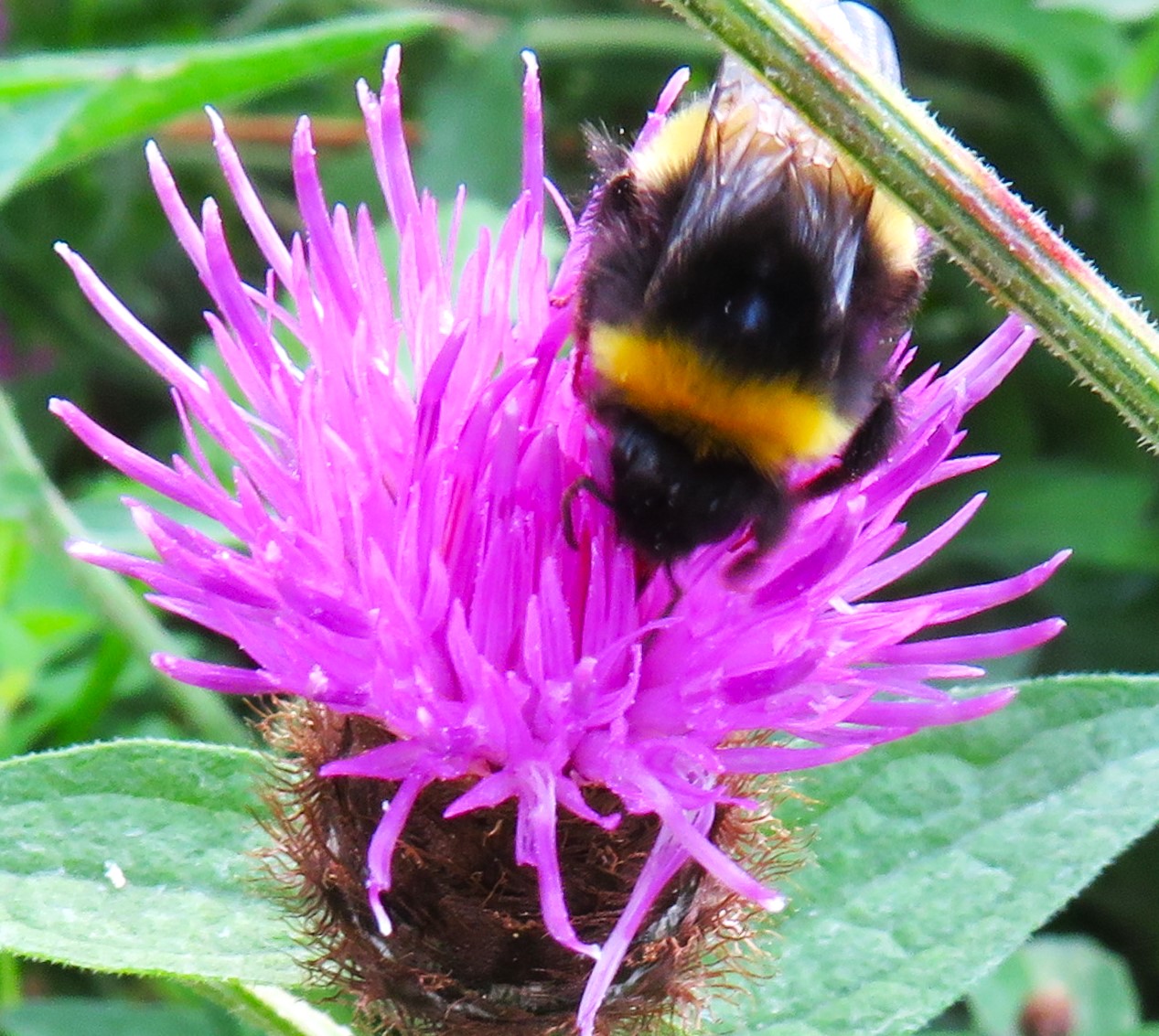
Bumblebee visiting knapweed grown from wildflower seeds for bees

Flowers provide the food

Why wildflower seeds for bees matter after flowering

A seed bomb is a way to plant seeds. The benefit for visiting bees begins when suitable plants grow and produce flowers containing accessible nectar or pollen.

Nectar for energy

Many flowers produce nectar, a sugary liquid collected by bees as an energy source while they forage.

Pollen for nutrition

Bees collect pollen from flowers and carry it back to their nests or colonies as an important food resource.

Different flower forms

A varied planting offers different flower shapes. This matters because bee species differ in size, tongue length and foraging behaviour.

A sequence of flowers

Plants that flower at different times can extend the period when a garden or container offers forage.

From seed bomb to bee visit

How seed bombs for bees fit into the growing journey

The clay ball begins the planting process. Suitable ground, moisture, time and care help the seeds move towards flowering.

Choose

Select a garden, container or approved site suited to the wildflower mix.

Prepare

Expose soil and reduce competing growth in the immediate planting area.

Moisten

Rain or careful watering softens the ball and supplies moisture to the seeds.

Establish

Seeds respond according to their species and the local growing conditions.

Flower

Established plants may produce blooms that visiting bees can forage from.

Bumblebee foraging on red clover in a UK wildflower planting

Inside the native British mix

31 wildflower species with varied forms and growing patterns

Our current wildflower seed bomb mix contains 31 native British wildflower species: 4 annuals and 27 perennials. Different species may germinate, establish and flower at different times, so a mixed planting can continue to develop beyond its first growing season.

The mix includes familiar flowers such as red clover, bird’s-foot trefoil, greater and lesser knapweed, field scabious, devil’s-bit scabious, viper’s bugloss and wild marjoram. This gives the planting a range of flower colours, shapes and heights when conditions suit each species.

  • Annual species can contribute colour during a suitable first season.
  • Perennial species may need more time before producing flowers.
  • Flowering depends on soil, moisture, light, weather and aftercare.
  • The species that appear can differ from one growing space to another.

Plant for the strongest start

How to plant wildflower seed bombs for bees

Prepared soil gives seeds better contact with the growing surface and reduces immediate competition. A small area or pot is also easier to observe and care for.

Use an approved space

Plant in your own garden, a container or a site where the landowner has agreed.

Expose the soil

Clear dense grass and weeds from the immediate area before placing the seed bombs.

Place on the surface

Set the seed bombs onto prepared soil rather than hard paving or thick established turf.

Monitor moisture

Water carefully when needed, especially while the seeds are beginning to respond and during dry weather.

Allow time

Continue light aftercare and let annual and perennial species follow their own schedules.

Look beyond one type of bee

Who may visit a flowering wildflower patch?

The visitors will vary by location, season, nearby habitat and which flowers are open. A small patch can become an engaging place to observe several groups of pollinating insects.

Bumblebees

Several bumblebee species may visit suitable flowers while collecting nectar and pollen.

Solitary bees

Solitary bees have varied nesting and foraging habits and may favour different flower forms.

Honeybees

Honeybees can forage across many flowers when colonies are present within flying distance.

Other pollinators

Hoverflies, butterflies, moths and beetles may also appear among suitable wildflowers.

Create a broader welcome

Make wildflower seeds part of a bee-friendly garden

Seed bombs for bees can form one part of a wider planting plan. Combining different flowering plants and maintaining the surrounding space thoughtfully can make a garden more useful and interesting throughout the growing season.

  • Grow a mixture of flower shapes rather than relying on one plant.
  • Plan for flowers at different points in the growing season.
  • Use pots, window boxes or planters when ground space is limited.
  • Allow suitable lawn flowers to bloom in selected areas.
  • Keep observing and adapt the planting to the conditions in your space.
Bumblebee and butterfly visiting a scabious flower

Practical planting answers

Wildflower seeds for bees: frequently asked questions

Do seed bombs feed bees directly?

No. The flowers are the food source. A seed bomb holds wildflower seed in a soil-and-clay planting format; after suitable plants establish and flower, visiting bees may collect nectar or pollen.

Which bees might visit the wildflowers?

Bumblebees, solitary bees and honeybees may visit suitable flowers. The visitors you see will depend on your location, the season, nearby habitat and which species are flowering.

Are native British wildflowers useful for bees?

Many native British wildflowers offer nectar or pollen and can contribute to a bee-friendly growing space. Plant choice, flower shape, flowering time and local growing conditions all matter.

Can wildflower seed bombs grow in pots?

Yes. A pot or planter with drainage can provide a manageable place to prepare the surface, monitor moisture and observe seedlings. Plantlife also recommends pots, hanging baskets and window boxes for people without a garden.

Can I place seed bombs on an established lawn?

Seeds face strong competition in dense grass. Prepare a bare or lightly cleared patch of soil so the seed bombs have better contact with the growing surface.

When should I plant seed bombs for bees?

Suitable timing depends on the species, local weather and planting conditions. Follow the instructions supplied with the product and use our UK planting guide for preparation and aftercare.

Will all 31 wildflower species grow and flower?

Not necessarily. Soil, moisture, light, weather, competition and care influence establishment. Annual and perennial species also follow different timescales, so the planting can change over more than one season.

Can I scatter seed bombs on public land?

Use your own garden or containers, or obtain permission before planting elsewhere. The land manager can confirm whether the mix and planting method suit the site and its existing management.

Start a bee-friendly planting project

Choose native British wildflower seed bombs

Explore wildflower seeds for bees in a simple seed bomb format, or read the planting guide before preparing your garden, pot or permitted project space.

Questions? Email enquiry@seedbombshop.co.uk or call 01536 614062.

Read More
Wildflower Seed Bomb
Wildflower Seed bomb

Wildflower Seed Bombs For Home DIY Projects

UK home gardening guide

Wildflower Seed Bombs for Gardens Seven Easy UK Home Projects

Wildflower seed bombs for gardens offer a simple way to turn pots, borders and small prepared patches into rewarding home growing projects. Discover seven practical ideas, learn how seed bombs work and plan a project that suits your available space.

Wildflower seed bombs for gardens displayed beside summer wildflowers
Select the image to open it at full size on mobile or desktop.
A simple planting format

Wildflower Seeds UK in a Simple Seed Bomb Format

For home gardeners researching wildflower seeds UK, a seed bomb brings the seeds, soil and clay together in a compact ball. It creates a convenient format that can be placed directly onto a prepared area of soil without needing to handle small seeds individually.

The seed

The seed selection determines which plants may establish. For a UK home project, choose wildflower seeds suited to the location and the conditions in which they will be planted.

The soil and clay

Soil and clay hold the seeds in an easy-to-position ball. Moisture softens the seed bomb after planting, allowing the seeds to meet the prepared soil beneath it.

Practical point: seed bombs still need a suitable site, contact with bare soil, moisture and ongoing observation. Germination and flowering will vary with the species, soil, weather and aftercare.

Ideas for different spaces

Seven Wildflower Seed Bomb DIY Projects for Home

Wildflower seed bombs for gardens can begin with the space you already have. A pot, a border edge or a small prepared patch can each become a manageable project that is easy to observe throughout the growing season.

01

Create a wildflower container

Use a wide container with drainage and a suitable growing medium. Place the seed bombs on the surface, give them good soil contact and position the container where it can be checked and watered easily.

02

Plan a colourful border trail

Prepare a narrow strip along a garden border and arrange the seed bombs in a gentle line or small groups. Mark the area so emerging seedlings can be observed and cared for.

03

Start a mini wildflower patch

Choose a manageable patch of ground, remove dense competing growth and expose the soil surface. A small area is easier to monitor while you learn what works in your garden.

04

Keep a family growing journal

Photograph the planting area each week and record rainfall, watering, emerging leaves and flowering dates. This turns the project into a simple introduction to plant observation.

05

Make your own seed bombs

Combine suitable wildflower seeds with peat-free compost, natural powdered clay and water. This hands-on activity works well when the materials and planting location are chosen in advance.

06

Prepare a plant-and-gift project

Pair seed bombs with a handwritten planting label and give them to a friend or family member who has a suitable pot or garden space. Add clear instructions so the project can continue after gifting.

07

Build a seasonal observation spot

Place a chair or viewing point near the planting area and note the flowers and visiting insects that appear. The project becomes a changing part of the garden rather than a one-day activity.

Choose your starting point

How to Make Wildflower Seed Bombs at Home

Making seed bombs can be a creative home activity. Ready-made seed bombs provide a convenient alternative when you would prefer to begin with a prepared mixture and concentrate on the planting project.

Make your own

Gather seeds suited to your location, peat-free compost, natural powdered clay, water, a mixing bowl and a tray.

  1. Combine the dry compost and natural clay.
  2. Mix in the selected wildflower seeds carefully.
  3. Add water gradually until the mixture holds together.
  4. Roll small, firm balls and place them on a tray to dry.
  5. Plant them on prepared soil in an appropriate location.

For another established activity method, see The Wildlife Trusts’ seed bomb guide or compare the National Trust’s wildflower seed ball activity .

For family activities: plan the activity with an adult, use materials intended for gardening, wash hands after handling soil and clay, and keep the finished seed bombs for planting rather than play.

From project idea to planting

How to Plant Garden Seed Bombs

When using wildflower seed bombs for gardens, begin with site preparation. Give the seed bombs direct contact with soil and choose an area that you can revisit for watering and observation.

01

Choose the location

Select a pot, border or garden patch with conditions suitable for growing wildflowers and practical access for ongoing care.

02

Prepare bare soil

Remove dense competing growth and loosen the surface lightly so the seed bomb can make direct contact with the soil.

03

Position the seed bombs

Place Seed Bomb Shop UK seed bombs approximately 30cm or 12 inches apart, following the product instructions for your chosen project.

04

Water and observe

Water gently after planting and continue to monitor moisture during dry weather. Avoid disturbing the area while seedlings emerge.

UK planting seasons guide for wildflower seed bomb home projects
UK seed bomb planting seasons. Select the graphic to open a larger version that can be zoomed on mobile.

Planning your date? Read the complete UK wildflower seed sowing guide before choosing when to begin.

Follow the project over time

What to Expect from a Native Wildflower Seed Mix

A mixed wildflower project develops over time rather than producing every species at once. Weather, soil, location, sowing time and care all influence which plants establish and when they flower.

Annual wildflowers

Annual species complete their life cycle within a growing season when conditions allow. Their timing will depend on sowing date and local growing conditions.

Perennial wildflowers

Perennial species may concentrate on root and leaf growth before flowering. A longer observation period gives the project time to show how the mixture develops.

Garden visitors

Once suitable flowers establish and bloom, they can provide pollen and nectar resources for visiting insects. Record what you observe without assuming every garden will attract the same species.

Ongoing care

Continue checking moisture, competing growth and the condition of the planting area. Home projects are most rewarding when they are observed and cared for beyond the planting day.

Seed Bomb Shop UK uses a mixture of 31 native British wildflower species. Review the complete native British wildflower seed mix before selecting it for your site.

Choose the right place

Plan Your Wildflower Project Responsibly

The best location is one where you have permission to plant, can prepare the soil and can return to care for the area. Your own garden, containers or an agreed community space allow the project to be managed properly.

Match seeds to the site

Check that the species are suitable for your location and intended planting area. If you are making your own seed bombs, select an appropriate UK wildflower seed mixture from a reliable supplier.

Plant where care is possible

A visible, accessible site makes it easier to check moisture, recognise new growth and keep a record of the project as it changes.

The Wildlife Trusts explains that wildflower planting in pots, flowerbeds and garden patches can provide resources for insects. See its wildflower seed bomb activity guidance for additional context.

Quick home-project answers

Wildflower Seed Bombs for Gardens: FAQs

Can wildflower seed bombs be planted in pots?

Yes. Choose a sufficiently wide container with drainage, fill it with a suitable growing medium and place the seed bombs on the prepared surface where they can be watered and observed.

When should I plant seed bombs in the UK?

The suitable time depends on the wildflower species, weather and site conditions. Use the linked UK sowing guide to choose a period when the soil is workable and you can provide appropriate care.

Do garden seed bombs need watering?

Moisture is needed for germination. Water gently after planting and monitor the soil during dry conditions, taking care not to wash the seed bombs or emerging seedlings away.

How long will wildflower seed bombs take to grow?

There is no single guaranteed timeframe. Germination and flowering vary with the species, sowing season, temperature, moisture, soil and care. Annuals and perennials may also develop at different rates.

Can children take part in a seed bomb project?

A seed bomb project can be organised as a supervised family activity. An adult should choose the materials and location, oversee the activity and ensure hands are washed after handling soil and clay.

Can I plant seed bombs outside my own garden?

Choose a location where you have the landowner’s permission and can confirm that the seed mixture is suitable. This also makes it easier to prepare, monitor and care for the planting area.

Read More
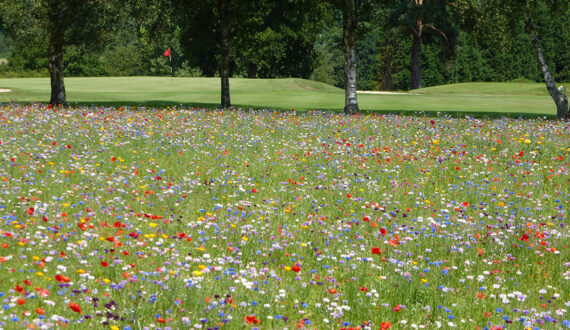
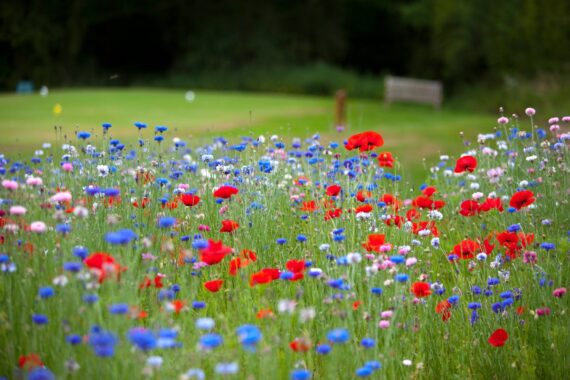
Wildflower planting beside an out-of-play area on a UK golf course
Wildflower Seed bomb

Wildflower Seed Bombs for Golf Clubs: A UK Project Guide

A practical UK course and grounds guide

Wildflower Seed Bombs for Golf Clubs A UK Project Guide

Wildflower seed bombs for golf clubs provide a manageable format for trialling native British wildflower planting in prepared, authorised out-of-play areas. The same approach can suit selected non-playing spaces around sports grounds, clubhouses and community facilities.

31 native British wildflower species Made with UK soil and clay Start with a small prepared pilot area Keep planting separate from playing surfaces
Wildflower seed bombs for golf clubs project in an approved out-of-play course area
Select the image to open the full-size version.

Begin with the right location

Where a golf club wildflower project can fit

The strongest starting point is a clearly defined area that does not affect play, safety, access or essential grounds operations. Every proposed location should be approved by the club’s course or grounds team.

Out-of-play margins

Selected rough edges and quiet margins may offer space for a small trial when the course manager confirms that the area is suitable.

Clubhouse beds

Prepared beds near the clubhouse can create a visible project that is easier for staff and members to observe.

Path and boundary areas

Suitable spaces beside paths, fences or site boundaries can be considered where sightlines, access and maintenance remain protected.

Pots and planters

Containers offer a controlled option for entrances, terraces and member areas where open ground is not appropriate.

A controlled first step

Wildflower Seed Bombs for Golf Clubs: Plan a Small Pilot

A pilot lets the grounds team test the location, preparation method, maintenance requirements and member response before considering a wider project.

Define

Agree what the club wants the pilot to demonstrate or explore.

Approve

Confirm ownership, safety, access and grounds-management approval.

Assess

Review soil, light, drainage, existing vegetation and nearby course use.

Prepare

Create a small area of exposed soil with reduced plant competition.

Record

Photograph the site and note planting, care and seasonal observations.

Wildflowers growing in a selected non-playing golf-course area
Select the image to open the full-size version.

Choose the right project scale

When a seed bomb format makes practical sense

Seed bombs combine wildflower seed with soil and clay in a format that can be placed onto prepared ground. This can work well for a modest trial plot, a supervised member activity, a clubhouse planting or a visible demonstration area.

For a large meadow, habitat specification or formal landscape scheme, the club should obtain site-specific advice on species selection, ground preparation, sowing method, quantities and long-term management.

  • Use seed bombs for clearly defined, manageable planting spaces.
  • Match the project scale to the available preparation and aftercare.
  • Keep the greenkeeper or grounds manager involved from the start.
  • Use specialist ecological or agronomic guidance where the project requires it.

Confirmed UK product information

A 31-species native British wildflower seed mix

Seed Bomb Shop UK combines selected wildflower seed with UK soil and clay. The current mixture contains annual and perennial species, creating a varied planting whose development will depend on the location and care provided.

31 native British wildflower species
4 annual wildflower species
27 perennial wildflower species

Planting variety

The mixture includes different flower forms, colours, heights and growing patterns.

Seasonal development

Annual and perennial species can follow different germination and flowering timescales.

Pollinator forage

After suitable plants establish and flower, some blooms may provide nectar or pollen to visiting insects.

Living results

Soil, light, moisture, weather, plant competition and aftercare influence what establishes.

Golf clubs and other sports facilities

Four ways to shape a responsible club project

Wildflower seed bombs for golf clubs and other sports facilities should be used within a clearly approved, prepared and monitored project. Use authorised non-playing land, protect the sporting function and match the planting to the site.

Golf-course pilot

Trial a small prepared patch in an approved out-of-play location chosen by the course manager.

Sports-ground boundary

Consider an outer boundary or separate non-playing area without using pitches, run-off zones or essential access routes.

Clubhouse display

Use prepared beds or containers to create a visible planting that staff, players and visitors can follow.

Member activity

Build a supervised planting or observation activity around an approved site and an agreed maintenance plan.

Questions before ordering

Give the project a clear working brief

A concise brief helps the club choose a realistic location, scale and format. It also makes the initial conversation with Seed Bomb Shop UK more productive.

  • Who will approve the location and planting method?
  • Is the objective planting, member engagement, gifting or a combination?
  • What are the dimensions and current conditions of the proposed area?
  • Who will prepare, monitor and maintain the site?
  • How will progress be photographed or recorded?
  • Does the project require ecological, planning or grounds-management advice?
Colourful wildflower area forming part of a managed golf-course landscape
Select the image to open the full-size version.

Specific facts build a credible story

Record what the club actually does

A well-documented pilot gives the club clear information to share with members and stakeholders without relying on broad or unmeasured environmental claims.

Useful project records

Keep a simple record that connects the planting decision with the work completed and the observations made.

Location and approximate planted area
Approval and responsible project lead
Seed mixture and planting format used
Ground preparation and planting date
Watering and maintenance actions
Dated photographs and observations

Extend the project to members and events

Connect planting with a club engagement idea

A club can keep the grounds project focused while offering a separate take-home or event activity for members, visitors, sponsors or staff.

Supervised club activity

Invite an appropriate group to help place seed bombs in a prepared, approved area while the grounds team retains control of the site and aftercare.

Custom-branded member gifts

Ask about branded seed bomb gift options for captain’s days, charity events, sponsor activities or staff engagement. Quantities, artwork, packaging and lead time should be confirmed before promotion.

Golf and sports-ground questions

Wildflower Seed Bombs for Golf Clubs: FAQs

Can seed bombs be placed on fairways, greens or sports pitches?

The intended approach is to use approved non-playing spaces. Fairways, greens, tees, pitches, run-off areas and safety-critical access routes should remain under the control of the course or grounds team and managed for their sporting purpose.

Which golf-course locations should we consider?

Possible starting points include suitable out-of-play margins, prepared clubhouse beds, selected boundary areas and containers. The course manager should approve the final site after considering soil, light, drainage, access, play and maintenance.

Are seed bombs the same as establishing a wildflower meadow?

Seed bombs are one planting format and can suit small prepared areas or engagement projects. A large meadow or formally specified habitat may need a different sowing method, site preparation, specialist mixture and long-term management plan.

How many seed bombs will our club require?

The answer depends on the approved area, layout and intended use. Send us the dimensions and project outline before ordering so the requirement can be discussed without guessing.

Will every wildflower species establish?

Not necessarily. Soil, moisture, light, weather, plant competition and aftercare influence establishment. Annual and perennial species also follow different development and flowering timescales.

How can flowers help visiting pollinators?

After suitable wildflowers establish and bloom, some flowers may provide nectar or pollen to visiting bees and other pollinating insects. The result depends on which species flower and the local conditions.

Does a seed bomb project satisfy ESG or Biodiversity Net Gain requirements?

A seed bomb project can be recorded as a specific club action, but it does not automatically demonstrate ESG performance or BNG compliance. Formal reporting requires suitable objectives, evidence, assessment and professional advice.

Can members plant seed bombs anywhere on the course?

Planting should only take place in a location approved and prepared by the club. A supervised activity keeps the grounds team in control of safety, placement and continuing care.

Plan the first conversation

Discuss a UK golf club or sports-ground project

Tell us about the approved location, approximate area, intended audience and project objective. We can then discuss suitable wildflower seed bomb options without assuming quantities or site conditions.

Questions? Email enquiry@seedbombshop.co.uk or call 01536 614062 .

Read More